Restaurant marketing costs in 2027 depend on the work you want to delegate and the service you need to promote. Maintaining a consistent presence, introducing a new menu and generating bookings for a particular sitting are connected briefs, with different production and delivery requirements.
Lead The Mood’s published plans start at €750 per month for Essential and €1,400 for Growth, excluding VAT, alongside separately quoted Custom scopes. These are references from our offer checked on 14 October 2026 for planning a 2027 brief. Your proposal confirms the restaurant’s requirements and applicable terms.
Build the budget around management, production, advertising spend and booking tools. Then establish how the service supports the journey from discovering the venue to making a booking and attending. A publication count describes only part of that journey.
Start with the restaurant service that needs support
A Tuesday lunch sitting may have spare capacity while Saturday is already fully booked. Another restaurant may attract interest but lose enquiries through an outdated menu or unanswered messages during service. These situations call for different work, even when the owners ask for the same “marketing package”.
| Situation | Work to include in the brief | What to review afterwards |
|---|---|---|
| Inconsistent presence | Practical production, current information and a calendar. | Delivered material, publication and handled enquiries. |
| A sitting with available capacity | A defined offer, communication and booking journey. | Bookings and attendance for that sitting. |
| An experience or menu that is poorly explained | Content, photography and presentation of the offer. | Information available to someone choosing a restaurant. |
| Group enquiries without follow-up | Enquiry form, conditions and a named response owner. | Relevant requests, confirmations and completed service. |
This decision makes quotations easier to compare. Social management and a complete booking campaign involve different responsibilities. If the brief needs both, show both. Where the problem is handling enquiries, agree what the restaurant will change before paying to generate more of them.
What a monthly retainer can cover
Our Essential offer lists two social channels, eight monthly content pieces and quarterly production, alongside community management, Google Business Profile and reporting. Growth adds monthly video production and coordination with SEO, blog and email; content volume is agreed. Check production already included before adding another shoot to the budget.
Managed campaigns sit within Custom, with media spend paid separately. A new website, refreshed identity or booking integration is not automatically part of every retainer. Establish included work, existing assets that can be retained and any separate projects.
If your whole brief is social presence, our 2027 social media package comparison covers that decision. A broader restaurant brief also needs to explain how booking enquiries will be handled and confirmed.
Food content production: describe the preparation

The Kings Café piece combines breakfast, warm light, a branded mug and typography. This reference by Beatriz Gomes and Estúdio Alastro makes preparation, selection and design easier to discuss. The image does not disclose its budget or results, and it is not a Lead The Mood case study.
For your shoot, choose dishes that can be prepared with the appearance and timing required. Include the room, team and details where they help explain the experience. Agree who prepares each scene and when production can take place without turning an entire restaurant service into a shoot.
Distinguish the session, final photographs, edited pieces and adaptations. Video can require framing, sound, editing and different versions. Describe formats and destinations so you know which material supports social, which serves the menu and which needs further work for a campaign.
A menu and identity may need an initial project
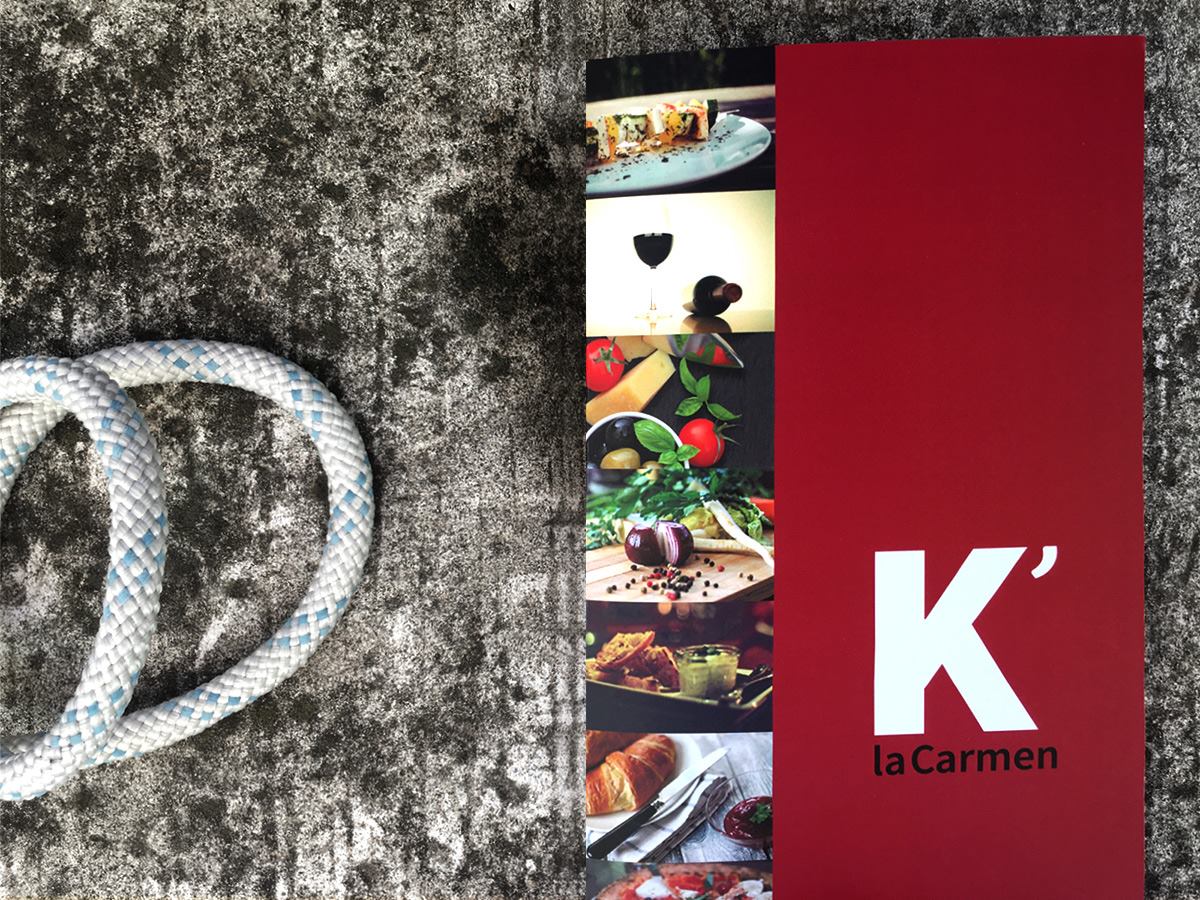
The K’laCarmen project by Grupo Code Barcelona, delivered with Code Barcelona, included identity, menu and applications. This 2016 reference shows a recognisable red menu cover with a strip of food photographs. It illustrates an initial deliverable, separate from monthly management; it does not represent a 2027 tariff.
If the offer needs a new presentation, define sections, content, languages, versions and the method of updating it. Then identify who will maintain dishes, prices and availability. Designing a menu and keeping it current are different responsibilities that need to be scoped without charging for the same work twice.
The booking journey must work when a guest is ready
Follow the journey on a guest’s phone: find the restaurant, check the menu and opening times, choose a booking route and receive an understandable confirmation. Identify what belongs to the restaurant, what the booking provider handles and what the agency needs to deliver.
If it ends with a call or message, agree who responds and what information they need. With an external booking engine, establish which data and booking states are available. A tap on “book” does not prove that a table has been confirmed.
For groups, clarify party size, conditions, dates and response times. The brief should support an actual journey with someone responsible for completing it. That makes a simple link improvement easier to distinguish from a wider booking implementation.
A worked monthly restaurant marketing budget
This is a hypothetical calculation for a custom brief, rather than a Lead The Mood plan or quotation. It assumes that the service covers agreed management, production and campaign management. The figures distinguish budget lines; all amounts in this example exclude VAT.
| Hypothetical budget item | What it covers | Illustrative monthly amount |
|---|---|---|
| Commissioned service | Agreed management, production and campaigns. | €1,800 |
| Advertising spend | Payments to advertising platforms. | €600 |
| Booking tool | The subscription assumed in this example. | €60 |
| Total of defined items | €1,800 + €600 + €60 | €2,460 |
Keeping those amounts unchanged for three months would total €7,380. A website, additional photography, print or variable platform charges would need adding where applicable. If a supplier includes an item within its service fee, do not count it again outside that fee.
Your booking provider may use different terms. Request subscription fees, possible variable charges and scope before entering a figure into the forecast. Similarly, media spend should be determined for your campaign: the illustrative €600 is not a universal budget recommendation, and €60 is not a quoted software price.
Cost per booking: define the booking first
Separate enquiries, confirmed bookings and attendance. An enquiry may find no availability; a confirmed booking may cancel. Use defined states and a comparable period when reviewing expenditure. Record the limits of the information available too.
In the hypothetical example above, fifty confirmed bookings with documented origins would give an allocation of €2,460 divided by fifty: €49.20 per booking. If forty of those bookings attended, the same expenditure divided by forty would be €61.50 per attended booking. These are illustrative calculations, rather than expected results or proof that marketing caused the bookings.
A booking can include several diners. To assess the business outcome, you also need covers, spend and associated costs. A table’s revenue is not its profit. Neither cost per click nor an isolated average spend figure can establish whether a campaign is commercially worthwhile.
What English-language agency offers help you compare
London agency Full House Hospitality lists ongoing support from £750 per month with a flexible campaign mix. Its description connects a commercial idea, booking route and review, with boundaries around the work included. This is a specific offer in another market, rather than a Spanish average or an equivalent to LTM.
For your own proposal, ask for a meaningful unit of work. A new-menu campaign and a last-table message need different production. Define what is prepared, where it appears, which booking route it supports and what the review will examine.
How the restaurant format changes the scope
A weekday lunch venue may need frequent information and material that accurately represents that service. An advance-booking restaurant may need more explanation of the experience and consistency between menu, website and confirmation. These are scoping decisions, rather than performance guarantees for either category.
For groups or celebrations, establish how enquiries and sales information will be handled. Across several locations, identify shared assets and venue-specific information. Do not simply multiply a retainer by the number of restaurants without addressing production, approvals and local responses.
Make the first month practical for the restaurant team
Supply the current menu, hours, address, booking rules, brand resources and usable photographs. Highlight sittings with capacity and dates that change the offer. Nominate someone who can confirm information and consolidate feedback from the team.
Allow kitchen and front-of-house time for agreed production. Decide how last-minute changes will be communicated and who removes an unavailable offer. The agency needs reliable information; the restaurant needs a calendar it can support while delivering its service.
At the first review, check delivery and unresolved dependencies. If content is ready but the menu remains out of date, resolve that inconsistency before increasing volume. If enquiries arrive without being closed, review the response process with its owner.
A useful brief names the service, offer and response owner
For example, a restaurant might want to communicate its Wednesday dinner menu. The brief should specify the dates, available sittings, menu version, booking route and person responsible for guest questions. It should also say when bookings close and how the team will notify the agency if availability changes. These details determine the work more clearly than asking for a certain number of posts.
Before production, agree who approves food descriptions and prices, and who can confirm that a photographed dish will be available during the campaign. After launch, use the restaurant’s booking records to distinguish requests from confirmed tables and attendance. The review can then discuss that service with known limitations, instead of combining every enquiry from every channel into a single unsupported result. This example defines a brief; it does not predict demand or establish an appropriate advertising allowance.
Adjusting the budget for seasonal changes
Build a calendar of menu changes, closures, holidays and special services. Identify which require fresh production and which can use existing material. This separates monthly delivery from an exceptional project.
When a month needs more production, ask what it replaces or which budget line is added. If restaurant activity reduces, review scope and agreed terms. Approving changes before production, and recording them in the brief, makes the financial commitment easier to control.
Request quotations you can actually compare
Give both agencies the same brief. For example, improve presentation and the booking journey for weekday dinners while maintaining regular restaurant communication. Supply availability, menu and existing resources. Request a description of the first month and a subsequent month, since initial preparation may require different tasks.
Compare what is resolved by each period’s end. One proposal may deliver photographs and posts; another may add booking-page changes and campaign coordination. Identify what you need to use, who will implement it and which responsibilities remain inside the restaurant.
If the available investment cannot cover everything, request an initial phase with a defined output and price. Organising the offer and fixing the booking journey may precede wider promotion. Record deferred work and its dependencies. A smaller brief works when it completes something useful; hiding necessary tasks merely moves their cost into the following month.
Questions before hiring a restaurant marketing agency
Does the retainer include advertising and media spend?
Check the scope. LTM’s published offer places managed campaigns within Custom, with media paid separately. Both items should be clear in the proposal.
How many restaurant bookings can an agency promise?
A number needs assumptions and evidence. Agree delivery, measurement and review criteria without treating a target as a guaranteed outcome. Availability, offer and the restaurant’s response also affect what happens.
What should we send for an initial proposal?
Explain which service needs support, how bookings work, what material is available and what investment you can sustain. Our restaurant marketing service helps define priorities and a proposal for the work you need to delegate.