The calendar is full of boxes and the team is asking what to post again. A line about self-care, a machine photograph and an offer that appeared last month. Instagram receives content; the clinic still lacks an introduction of its own. A useful way forward often begins outside the app: listening to people’s questions, deciding what the centre can explain and preparing the material to tell it with some personality.
This guide proposes an Instagram content calendar an aesthetic clinic can produce and review. We will examine topic choices, formats and an example delivery of eight original pieces. The number makes the commission specific; the actual frequency depends on the team, materials and work agreed. Each post should have something recognisable to communicate and a place within the centre’s wider presentation. That makes the calendar easier to prepare and gives providers a brief the clinic can assess.
Begin with conversations the clinic already has
Before searching for fifty ideas, collect a few reception questions. How to request a first consultation, who provides a service, where the centre is and which information someone can read before calling. These starting points belong to your activity. Record what the person needs to understand and who can supply an explanation. The calendar then begins with available information and an owner to ask when something is missing, rather than a topic left for somebody to invent later.
Speak with the clinical team about subjects it wants to develop and content it can approve for a general post. A practitioner explanation and an organisational instruction have different review processes. Identify them when preparing the brief. Where a subject requires individual assessment, a piece can explain how to request it and what general information the centre provides, leaving that decision to the practitioner. Every reception question does not need to become treatment advice.
Who works at the centre and their role.
How to arrive and the space welcoming visitors.
How a first consultation is requested and arranged.
A topic a practitioner can review and communicate.
These families vary the content while maintaining a thread. A practitioner profile, reception photograph and contact explanation can use different images and still describe the same clinic. To prepare that voice, the aesthetic clinic branding guide examines what you want people to understand and which information supports it. The calendar turns that direction into specific pieces the team can recognise and use.
Choose the format after defining the message
A spoken introduction might call for video; arrival instructions for a photograph with practical information; a sequence of steps for several images. The format should make the idea understandable. Starting with a decision that everything will be Reels may mean filming something better explained another way. Putting everything into a text template may leave little opportunity to meet the people and place. Decide what the piece needs to communicate before choosing how to produce it.
Give each piece a sentence describing its purpose. For example: “Help a first-time visitor recognise the entrance.” Then decide which image will do that, what copy it needs and what follows. That sentence also supports design review. If the door is barely visible, the composition is not resolving the brief, however well it matches the rest of the profile. Visual direction has a specific task and can be discussed in relation to it.
The dr.saash social mockup published by Olya Cooper on Behance offers a way to examine message size, hierarchy and presentation on a phone. It is a composition reference rather than an LTM campaign. Your materials need testing with the actual copy, clinic name and publication context at mobile size. A piece should be readable without requiring people to enlarge the screen. The reference helps frame that discussion while the clinic’s own information supplies the message.
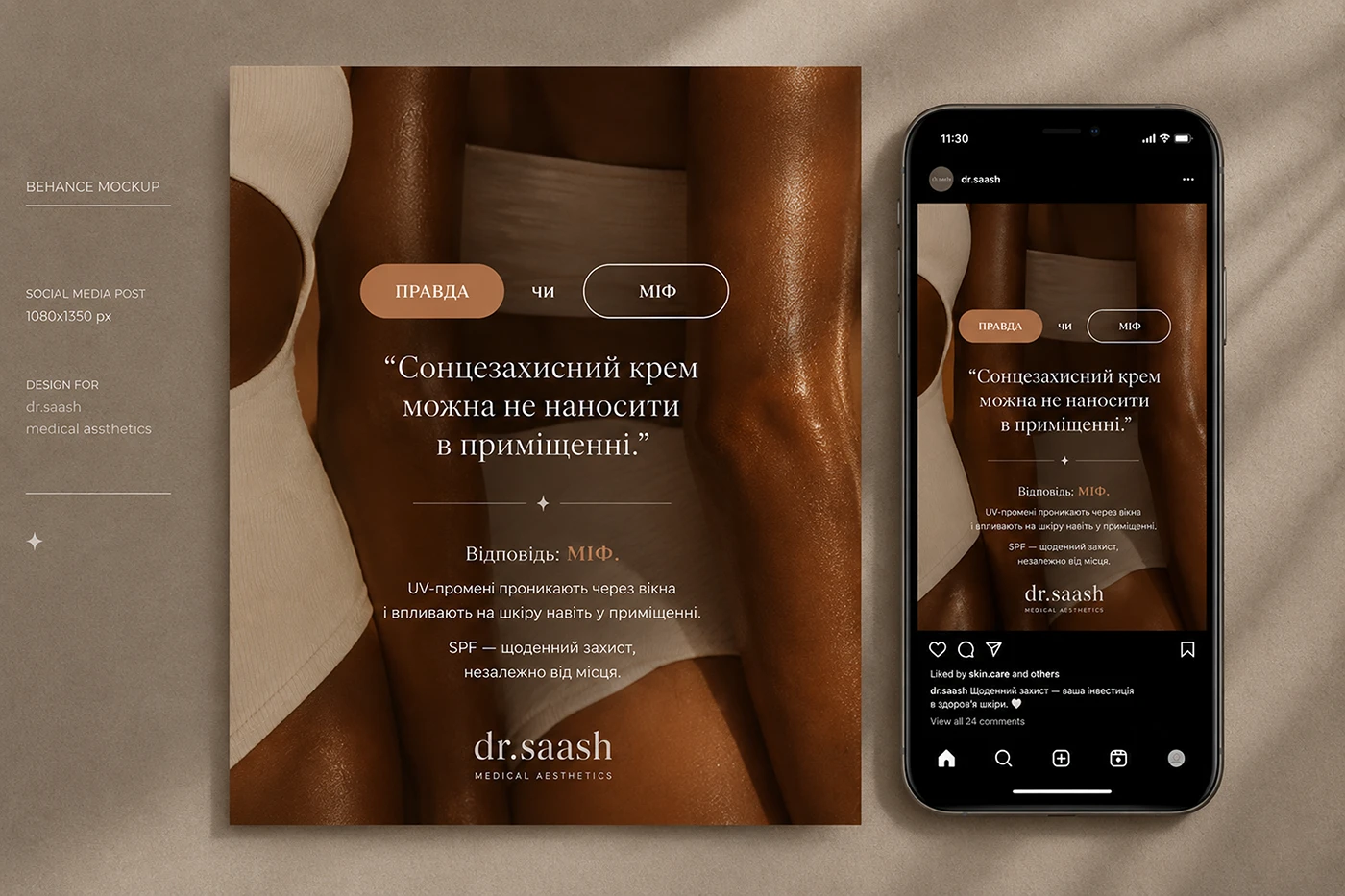
The calendar’s arrival piece could become a straightforward image sequence: an exterior view identifying the building, another showing access and a final frame with practical details. Each image has a job, with copy supplying what cannot be seen. Ask whether somebody unfamiliar with the clinic could find their way using that material. For this commission, that is a more useful review question than whether every photograph has precisely the same colour treatment. The design can then improve the information rather than simply matching a style.
Produce a series with its pieces planned beforehand
A session can combine portraits, premises photography and interviews when the brief defines what it needs from each. Prepare participants, messages, locations and a shot list. A practitioner might record an introduction and contribute an explanation for another piece; reception could show the arrival route and explain contact arrangements. Agree the scope of those contributions, allowing time to prepare image and sound and check that the material has been captured properly.
Count originals by their idea and development, with adaptations separate. An interview becoming a Reel and its Story version shares a production foundation. A second video carrying another message involves additional editorial work. The proposal should identify what is filmed, edited and delivered in each version. Photography, captions, covers and revision rounds need their own place in that description so the clinic can compare what it will receive. A folder of recordings is a different delivery from finished posts.
Message, brief, participants and shots.
Filming, photography and material checks.
Selection, editing, copy, review and versions.
Check captions and names in videos containing speech. W3C explains accessible captions and the need to check the accuracy of automatically generated text. A mistranscribed word can change the meaning of a clinic’s explanation. Watch the video without sound and check that the speaker is identified too. Content review and readability form part of the delivery alongside visual finish, with corrections made before the piece is scheduled.
An example month with eight original pieces
Imagine a single-location clinic with a practitioner available for the session and reception able to supply organisational information. The example below proposes six graphic or photographic pieces and two videos. These are eight original ideas across four weeks; adaptations for other placements are agreed separately. The calendar does not assume patient imagery or treatment outcomes. It begins with the team, premises and explanations the clinic can prepare and review, giving the session a defined set of materials to produce.
| Week | Piece and message | Required material |
|---|---|---|
| 1 · Photograph | Introduce a practitioner and their role. | Portrait and confirmed profile. |
| 1 · Sequence | Show how to recognise the entrance. | Exterior, access and directions. |
| 2 · Video | Explain how to request a first consultation. | Organisational script and presenter. |
| 2 · Photograph | Introduce the reception space. | Original image and description of the place. |
| 3 · Sequence | Develop a general question selected by the team. | Approved copy and suitable images. |
| 3 · Photograph | Show a clinic detail with context. | Image and reason for selecting it. |
| 4 · Video | Explain how the first consultation is approached. | Approved brief, interview and supporting shots. |
| 4 · Graphic | Explain location and contact arrangements. | Checked details and correct destination. |
The table provides a recognisable session brief. Portraits support introductions; exterior and reception images describe arrival; interviews are recorded against defined questions. If the third week’s explanation is not approved, decide before scheduling whether other available information should replace it. Preserve a purpose and required materials for the replacement. Filling the gap with a generic phrase simply leaves the editorial decision outstanding, ready to cause the same difficulty in the following month.
When reviewing the calendar, ask to see the copy and piece rather than the topic alone. “Meet the team” can still mean many different things. A prepared version shows whom it introduces, which photograph it uses, what it says and where it invites somebody to continue. Social media management for aesthetic clinics can combine planning, production and publication within a defined scope. The centre needs to know what it must supply and when review is required.
The two videos need different briefs. The request video might follow steps confirmed by reception, presented by somebody explaining the process. The consultation piece should explain what general information the centre provides at the first visit, using a brief reviewed by the clinical lead. Before recording, write what should be clear at the end of each piece and which images will help communicate it. Review the selection against that purpose. If both videos become almost identical introductions, revise the second message rather than counting it as a new idea with a different cover.
Continue the explanation when a subject needs more space
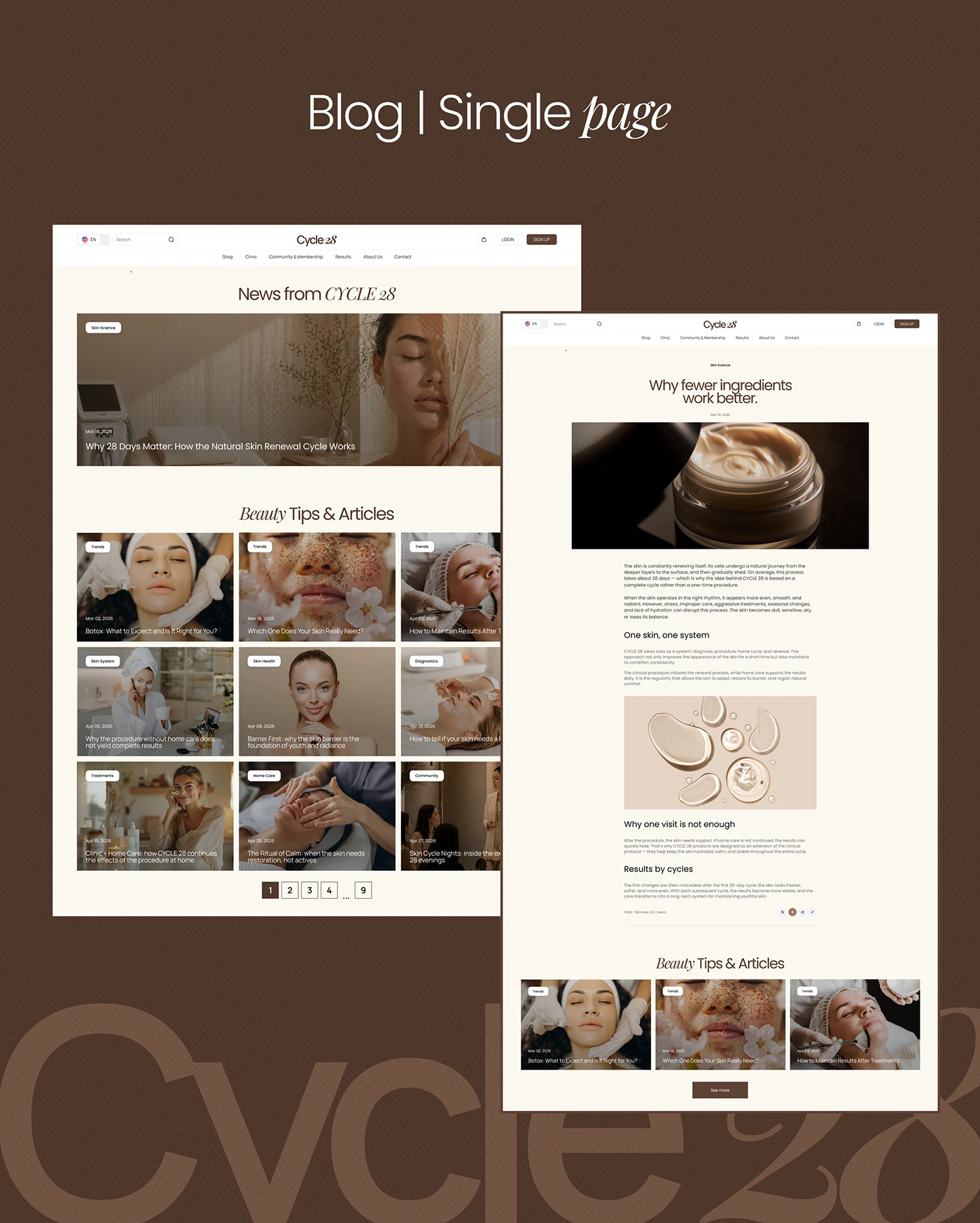
Some subjects deserve their own page. A post can introduce a question and lead towards fuller website information when the destination is ready. The Cycle 28 presentation on Behance shows an article listing and reading page within its digital proposal. Here the relationship between image, title and development is the design reference. Your clinic’s care-related content requires its own writing and review; the mockup supplies a way to discuss the editorial layout.
Visual direction can travel from website to social channels as well. In Likha, WONDR’s project featured on Awwwards, portrait and typography create a recognisable introduction. For your communication, prepare guidance on images, names, colour and copy that works when the format changes. Continuity does not require identical composition in every post. It lets the profile keep belonging to the clinic while the subject changes, giving the team room to communicate different kinds of information.

Check contact from a phone and agree who handles questions. A message still needs a response and, where appropriate, an arranged appointment. The guide to enquiries that do not become bookings examines that continuity. If advertising is also planned, it has its own preparation and review: the Google Ads and Instagram Ads comparison distinguishes campaign, content and destination so the clinic can define those parts of the commission separately.
Review the work to make next month easier
Clarify what happens after publication as well. Preparing and scheduling pieces is a different scope from handling comments and messages every day. Identify who performs each task, which questions they can answer and which belong with the centre. If management includes adapting a piece into another language, count writing and review for that version. These decisions make delegation more precise and preserve reception’s role in the conversations it needs to handle, while giving the provider a defined remit.
Assign one person at the centre to collect feedback and identify pieces needing clinical review. The calendar should show what is outstanding, approved and published. If a practitioner, opening hours or contact process changes, identify the affected pieces. Maintaining that information is part of management. A considered profile becomes less useful when its content no longer corresponds to the centre, so agree who reports changes and who updates scheduled material.
Separate delivered work, observable activity and received enquiries in the review. Examine which pieces were seen, which questions appeared and which contacts can be related to content, recording what remains unknown. A view does not equal a confirmed appointment. Reception’s observations supply topics too: repeated arrival questions might indicate a missing explanation or a destination that is difficult to find. Use the review to decide which information and materials the next commission needs.
Lead The Mood can prepare the direction, produce materials and maintain continuity through social media for your aesthetic clinic. Show us the profile and tell us what your team can contribute, which images exist and who will review content. We can define pieces, sessions and versions so the next calendar has work behind every box. The question “what shall we post?” can then begin to receive answers that sound like your clinic.