Every autumn brings a trends list with enough ideas to occupy the team until the following December. Video, AI, new search tools, automation and a platform somebody insists will be essential. Meanwhile, the clinic still needs to explain its work, present itself thoughtfully and respond to enquiries. A trend becomes interesting when it turns into a concrete commission whose usefulness can be reviewed afterwards, with the centre able to recognise what was delivered.
For aesthetic clinic marketing in 2027, we propose four areas to test: findable and understandable information, original team content, a clearer contact journey and a recognisable brand. Prepared on 19 October 2026, this guide presents working hypotheses based on the current context, without assigning results to a future we have not observed. Each clinic needs to choose its first priority. The practical question is which work would address a need the team can already identify.
AI search deserves attention and a defined commission
The public programme for a British College of Aesthetic Medicine session on marketing in 2025/26 already includes search developments and short video. This signals a professional discussion in the UK market rather than measuring how patients search in your city. It can inform questions to investigate through your clinic and its data, without assuming every recommendation transfers directly to a Spain-based centre.
Google’s AI Overviews and AI Mode documentation retains SEO fundamentals and requires no special files or markup. A useful test can examine whether the website clearly explains services, practitioners and location, with linked pages and consistent information. It leaves recognisable improvements and supports search observation. It does not guarantee a generated answer will mention the clinic.
If a provider proposes monitoring AI answers, request the procedure: questions, language, location where it can be established, tool, date and repetitions. An isolated screenshot has limited context. Google observations do not automatically describe other products. Distinguish information improvements, answer monitoring and received enquiries in the commission. The 2027 aesthetic clinic SEO guide helps define cost and reporting, so any additional proposal has tasks and evidence behind its name rather than a promise of universal AI visibility.
A source, data point or difficulty at the centre.
What appears worth investigating through a change.
What will be delivered and how it is reviewed.
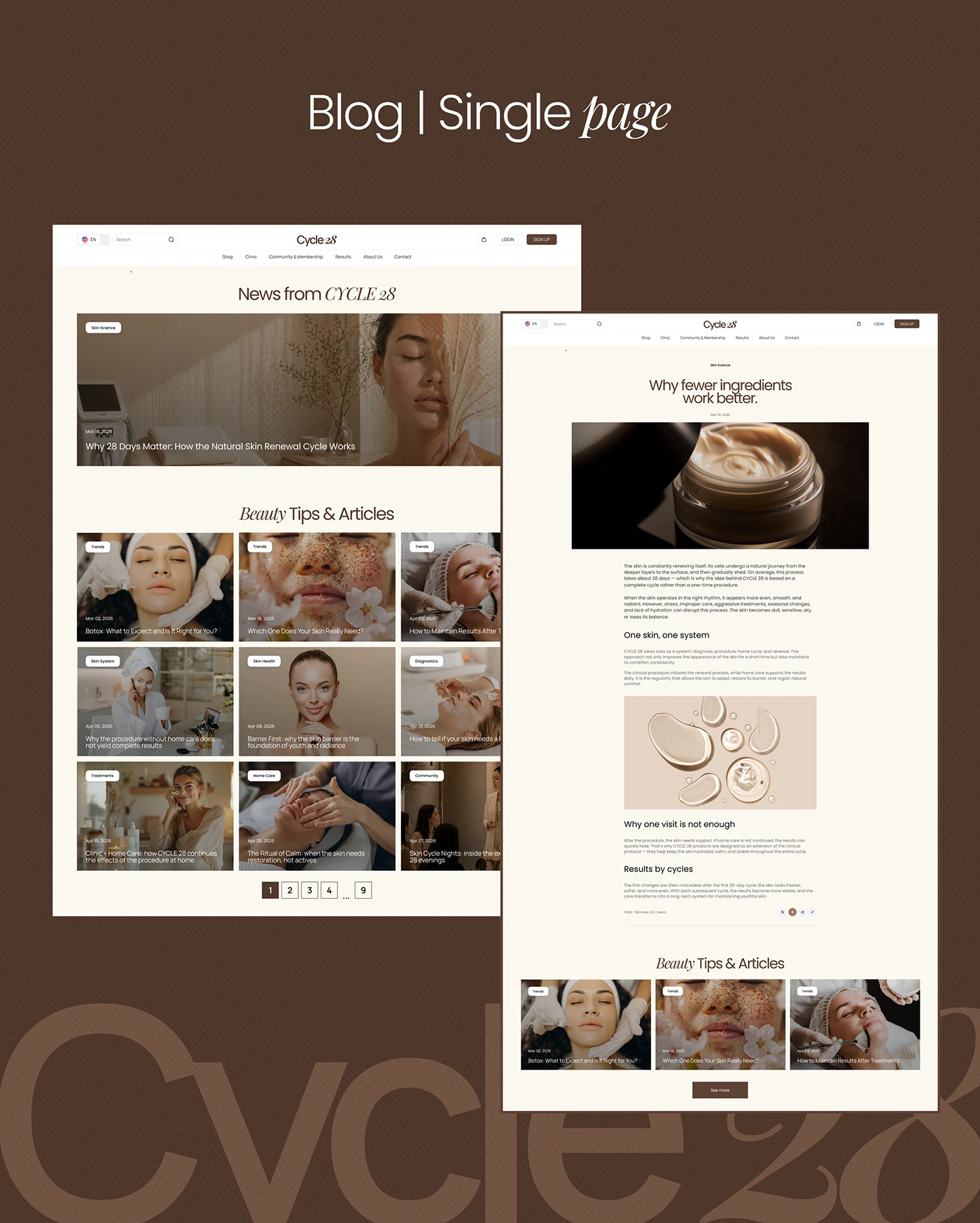
A content library needs a reading experience too. Cycle 28, by Tania Syoma, Julia Tarna and Varvara Barva on Behance, presents a content listing and article layout. It provides a composition reference. Your topics need to follow actual services and questions, with professional review where appropriate. The mockup demonstrates design; editorial decisions need the clinic’s own information. Discuss how the intended material will work within the layout before committing to a larger production programme.
Original team content needs people, time and editing
A short introduction to the practitioner responsible for a service can communicate information the centre already has but has not explained well. Begin with a concrete question: what should somebody know before contacting you? Prepare an explanation, its speaker and the material required. It could become a video, a page or both. Choose the format after identifying the information and the team’s capacity. The production brief then has a purpose beyond keeping up with another format.
A first commission might produce an introduction to the centre and an explanation of how to request a consultation. These are distinct messages. The person appearing reviews their contribution and the clinic confirms the process described. Editing, captions and agreed versions follow. The photo and video shoot guide helps define deliveries and avoids relying on improvisation when the camera arrives. Preparation makes limited practitioner availability easier to organise around a small number of useful, specific pieces.
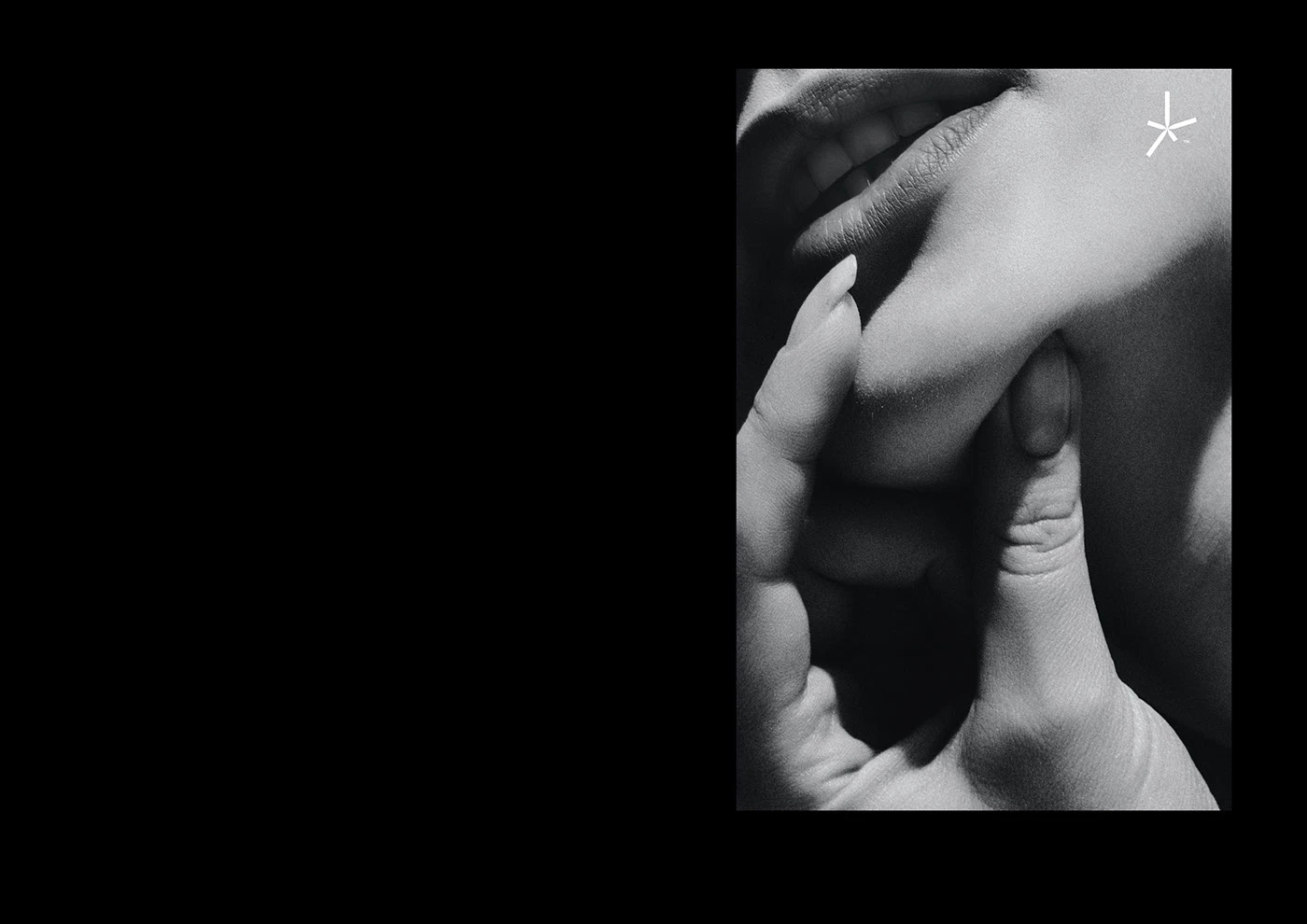
Neya’s black-and-white portrait, within M Studio’s identity project on Behance, supports a discussion of image, space and brand. It is a graphic reference without presenting the pictured person as your practitioner. Your clinic needs its own portraits and footage. Visual direction can have personality while allowing a clear introduction to each person and role. Discuss that relationship before the shoot so the photographs and design are prepared for the same intended uses.
AI can help organise a script or prepare text versions using reviewed public information. Final value still depends on what the centre can explain and approve. Google’s generative content guidance warns against producing many pages without added value. For this work, we propose original materials, checking and a named owner of the published version. Individual care information remains outside that editorial process. The tools should support a defined delivery with an accountable review.
A clearer contact journey may deserve priority over another channel
Before opening another account, use the website from a phone as a first-time visitor. Is the service understandable? Is location visible? Does the button send a request or confirm an appointment? Note missing information and ask reception to follow the journey with you. An improvement test can focus on that stage, leaving a specific change to verify afterwards. The team starts with an observable problem rather than a general claim that the website needs more conversions.
For example, a form may appear to book immediately even though reception must confirm availability. Review its title, instructions and final message to explain the actual process. Identify who receives the request and what follows. W3C recommends labels that identify form controls; that clarity belongs within a wider usability review. The commission should cover design, implementation and checking, with responsibilities assigned so recommendations can become a functioning change on the live page.
Keep baseline data and record change dates. Observe unique requests, reported problems and appointments the centre can confirm over comparable periods. If the campaign or offer changes too, retain that context. A subsequent improvement can have several possible explanations. The guide to enquiries that do not become appointments helps organise these layers without treating each click as a new patient. The review should make clear which observations support the next decision and which questions remain unanswered.
Apply the same approach to automation. An acknowledgement can explain that a request arrived and when it is handled, according to the centre’s process. Its wording should correspond to what actually happens next. A proposed connection to a diary or internal tools needs defined scope, data and owners before implementation. The opportunity is a concrete task the team understands and can review, with an identifiable change rather than a broad promise that automation will handle reception.
A distinct brand helps decide what to test and what to pass over
Visual direction and tone help determine whether an idea belongs to the centre. A clinic can naturally introduce practitioners, show its premises and explain services without adopting every style appearing on social media. A test can prepare a small family of pieces using actual information and review whether the team recognises itself. Ask what readers understand and what is missing alongside colour preferences. That turns a visual discussion into decisions useful for the next production.
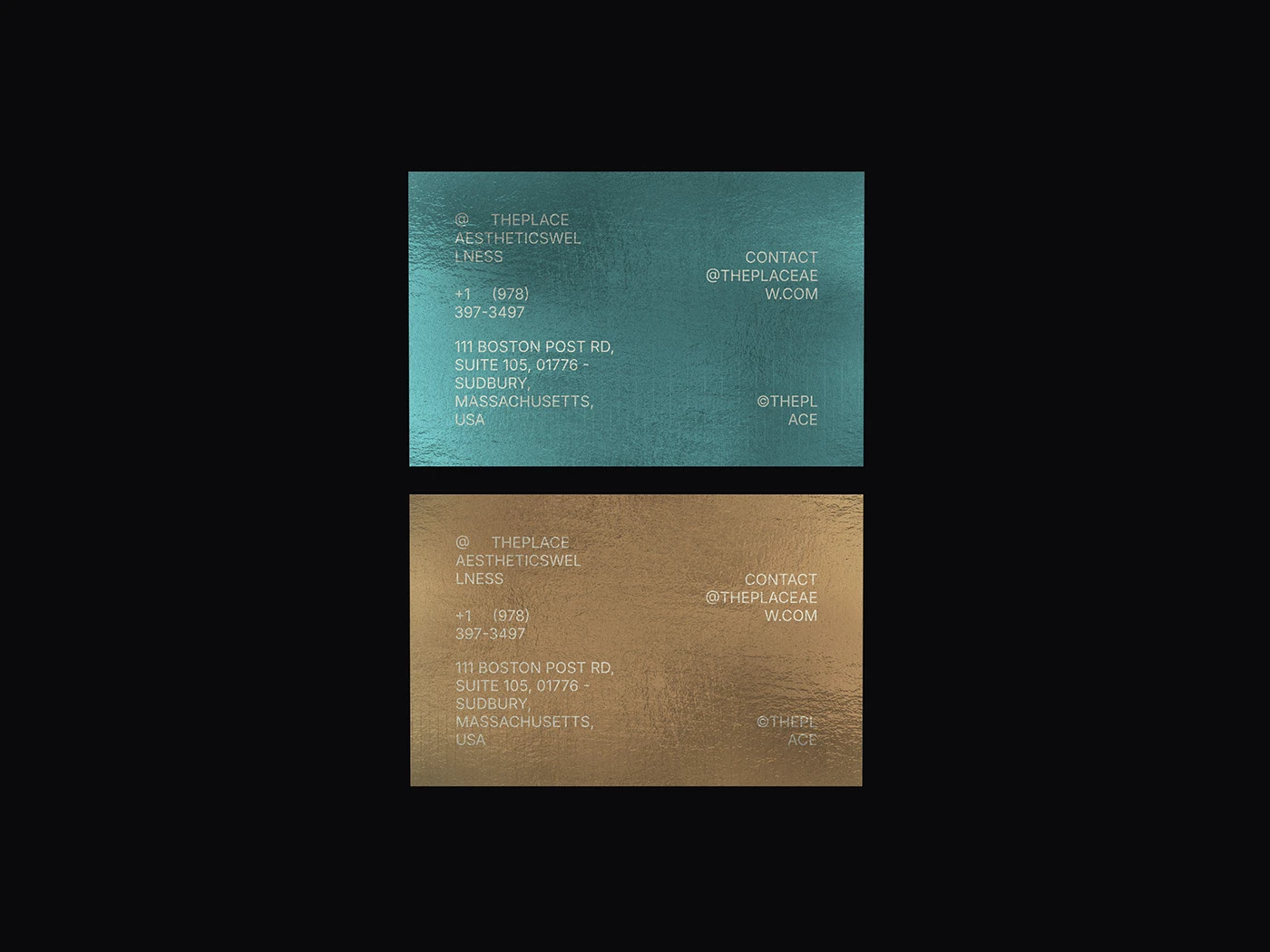
The Place, with creative direction by FourStudio&CO, visual identity by Luigi Bressa and support from Digital Fuel Agency, shows two card applications in a Behance project. The variants share a visual system across different finishes and compositions. The reference illustrates continuity and variation within an identity. Your clinic’s criterion needs to transfer to pages, posts and materials given to people making enquiries, with a design system that can accommodate different information and uses.
The aesthetic clinic branding guide develops that definition. For a content test, prepare a sample page, practitioner introduction and general reception reply. If the direction works across these uses, there is material to continue. If it only works on a cover, adjust before producing the quarter’s content. This rehearsal can avoid substantial reworking later and gives the clinic a more practical way to approve direction than choosing among isolated visual presentations.
Choose a test and define how the decision will be made
These four areas compete for time and budget. Choose the one addressing a visible need. Incomplete service information may deserve development first. Strong content with a failing contact route suggests reviewing that journey. A team with useful things to say but little presence in its materials may benefit from original production. Discovery determines the order of work. The proposal should explain that choice in terms the clinic can recognise before it commits resources to implementation.
| Test area | Possible delivery | What to review |
|---|---|---|
| Search and information | A reviewed, internally linked service page. | Publication, observed searches and attributable enquiries. |
| Team content | Two original pieces with distinct messages. | Understanding, questions and observable contacts. |
| Contact journey | A form and confirmation matching the actual process. | Tests, reported issues and received requests. |
| Brand expression | A small family of pieces using original information. | Clarity, coherence and usefulness for the team. |
The table proposes deliveries rather than guaranteed outcomes. Before starting, record the question, intended change and approver. Reserve time to review data and listen to reception. A bounded test might use a six-week cycle: preparation, publication and review, with two weeks as a reference for each stage. This is an illustrative organisational calendar, not a timeframe in which a campaign, page or format is expected to produce results. The commission needs to retain that distinction.
What the clinic needs to find out.
Work to publish or implement.
What can be observed and what remains open.
Continue, adjust or close that line.
A before-and-after comparison supplies context without isolating the change’s effect. A proposed grouped experiment needs to justify its comparison and whether enough data exists. Where it does not, record learning and uncertainty. The review may conclude that further observation or another intervention is needed. That can still be useful for deciding the next commission. Agree what would support continuation before the work begins, while leaving room to explain findings that do not match the initial hypothesis.
Turn the 2027 plan into work the clinic can delegate
The annual plan should identify priorities, production, approval and review. A completed test may become an editorial family or process improvement; another can close without occupying the rest of the calendar. Ask how learning feeds into the next quarter. Continuity needs recognisable work and room for changes at the centre, such as a practitioner appointment or another location. Review what remains useful before assuming that the previous quarter’s format should simply be repeated.
Where the centre communicates in several languages, define the test language and who reviews each adaptation. The team also needs to continue the conversation when somebody contacts it in that language. Published content, link destination and response belong to the same journey, so prepare them together when specifying delivery.
An agency can bring strategy, design, writing, production and development together around the brief. The clinic supplies information, validates descriptions of care and confirms how enquiries are received. Our aesthetic clinic marketing service defines that coordination. When comparing providers, request deliveries and exclusions alongside the materials your team must contribute. A trend can then lead to a comprehensible purchasing decision, with a shared view of the work each team will need to sustain.
Tell us what you want to prepare for 2027 and what is difficult to resolve today. Lead The Mood works with the Code Barcelona group’s strategy, design and development team to organise the first test and bring it to publication. The calendar becomes interesting when it contains things worth explaining and a team that knows how to carry them through, with a clear review of what deserves the next effort.