“An eight-page website, with the treatments and a booking button.” The brief sounds settled until the questions arrive. Who writes the pages? Are practitioner portraits ready? Does the button open an existing diary, or does somebody need to build the booking system? Those answers often explain much of the difference between two quotes that initially appear to promise the same thing.
Planning an aesthetic clinic website for 2027 means separating the initial project, its materials and ongoing operation. This guide develops an illustrative €8,200 project and a €10,060 budget for its first twelve months of use, with visible assumptions. These are planning figures for a Spain-based commission, before VAT, rather than Lead The Mood fees. The guide is reviewed on 19 October 2026 to prepare for 2027. A proposal must confirm its own scope, amounts and conditions.
A price becomes useful when the website is defined
A new clinic may need to introduce its premises, team and four service areas. Another already has useful website information and needs reorganisation, retained page addresses and better contact. A group with several locations needs to explain who practises where and what each centre offers. These are different commissions despite sharing a large header photograph and similar navigation. A quote should describe those differences before attaching a number to them, so the clinic can recognise what it is buying.
Begin with a list of pages and functions. Mark what is ready, what needs reviewing and what must be produced. Add languages, locations, the booking tool and people approving content. That definition helps estimate strategy, design and development work. It also identifies exclusions. Our website design service for aesthetic clinics scopes the project around those decisions, with agreed materials and revisions. The starting information makes it easier to discuss a specific commission rather than a general promise of a new website.
The information people need to find.
Who prepares copy, photography and versions.
What the site does and which tools it uses.
As a current reference, our corporate website service starts from €6,000. This is a starting price requiring a defined scope; a 2027 proposal must confirm its amounts and terms. Ask what design is delivered, how many pages are developed and which content the clinic supplies. Establish whether you are buying a project, a subscription with continuation terms or a combination. Comparing the first payment without considering the work and subsequent months can leave a significant part of the decision unexplored. Ask each provider to describe the same period and the same requirements.
Pages, copy and photography: the work that fills the design
Service pages need information the clinic can approve: what it offers, who provides it, how the first consultation is approached and what an interested visitor should do. An agency can research, organise and write; care-related information requires review by the responsible person. The commission should identify both tasks and the approval process. “Content included” might mean uploading supplied text or developing pages through interviews and editorial work. Those deliveries need different descriptions and different input from the centre.
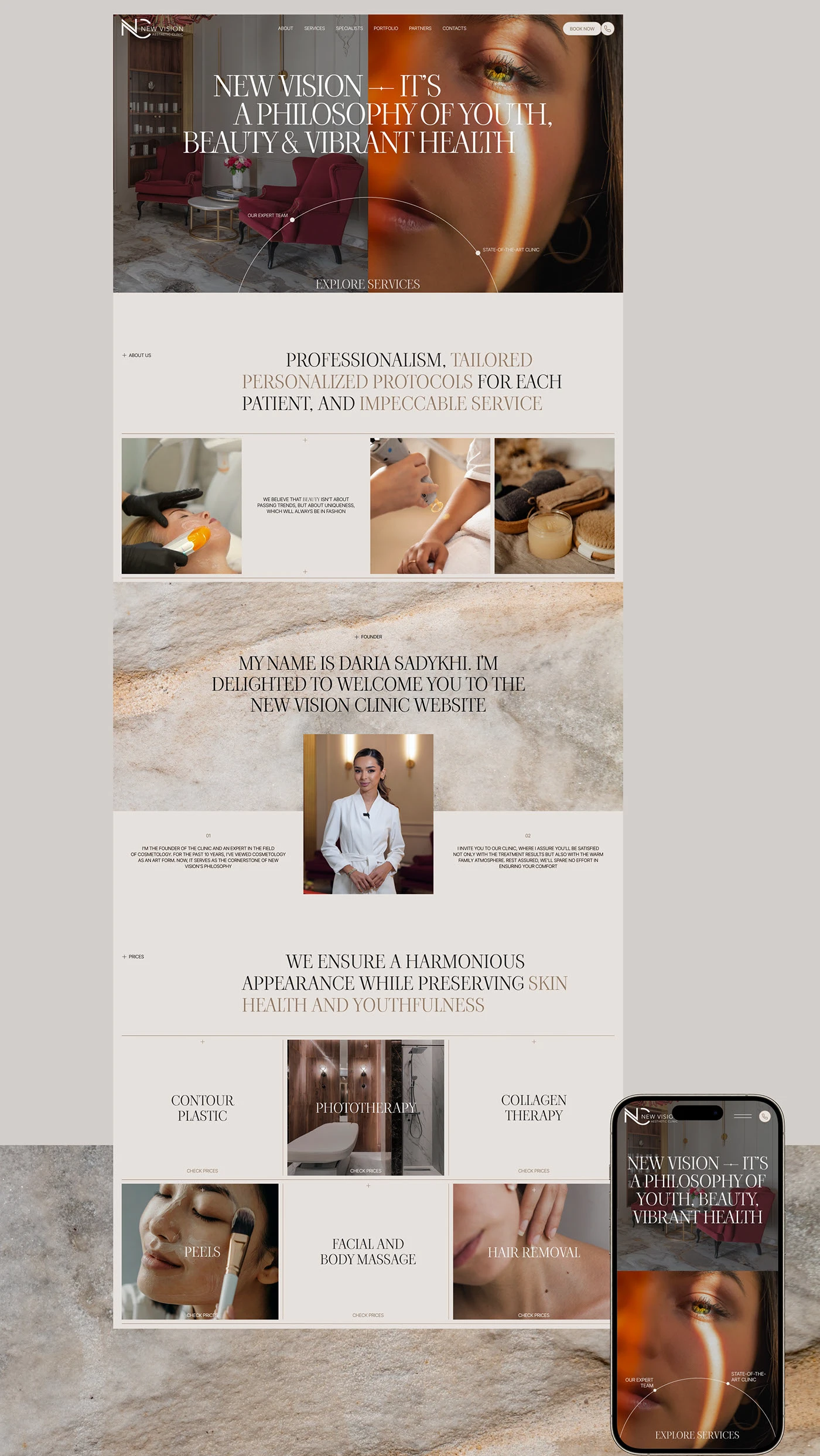
In the New Vision redesign published by Nuriia Akhmetova on Behance, the presentation combines premises, portrait, copy and services alongside a mobile adaptation. It offers a reference for the materials participating in one composition. Design authorship is credited in the project. Your centre needs its own images and copy, with checks for different text lengths and screen sizes. The reference helps discuss those decisions without treating the pictured clinic or its results as work delivered by LTM.
Available photography changes the brief too. Authorised existing material may cover part of the project; new portraits and interiors require preparation, a session and editing. The clinic photo and video shoot guide helps specify those deliveries. Another language requires review of search intent, copy, navigation and layout with different text lengths. Request complete versions with review, rather than counting translated words alone. Identify which pages and functions will be available in each language so the visitor’s journey remains understandable.
When the centre supplies text or images, agree a date and delivery criteria. Files in a folder may still need review for quality, dimensions and permitted uses. Checking them before design approval exposes gaps while they can be planned. Replacing material after screens are approved can add composition, development and checking work. Show that dependency in the schedule and project conditions, including who confirms that the material is ready to use and what happens when an essential item is late.
A booking button can conceal very different commissions
Describe the contact journey separately. A link might open the external diary the centre already uses. A form might send a request that reception must confirm. An integrated development could need to check availability, assign practitioners or synchronise information with another tool. The button’s appearance explains little of that difference. Before pricing, identify what happens after it is pressed, who controls the next stage and what the clinic considers a confirmed appointment. Make those arrangements clear to the person using the page.
Where a platform exists, review integration options and conditions with its provider. The proposal should specify configuration, development and any separately paid subscription. Bespoke integration needs technical discovery: documentation, authorised access and testing. It may require its own project. The aesthetic clinic website features guide provides a starting point for reviewing information and contact before choosing functions. A more complex connection should follow an identified need, with its delivery and maintenance responsibilities described in the brief.
Likha, WONDR’s digital project featured on Awwwards, shows photography and typography within a shared presentation. That finish belongs in the design discussion. When comparing proposals, ask for the functionality behind the pages too: editable information, contact and maintenance. The image helps discuss visual direction; the quote needs to explain the work that makes the page usable after publication. Describe both parts clearly enough for the clinic to recognise what will be reviewed and delivered.

A simple rehearsal helps define the journey. Somebody reads a service on mobile and requests information. Reception checks what arrives and what action is needed. Repeat the booking route where it uses another platform and review the visitor’s final message. The exercise can reveal unnecessary fields, lost context or a confirmation interpreted differently by the team. The commission should identify who runs these checks and how adjustments are gathered before publication, using an agreed testing procedure.
An example quote for eight pages and one location
The exercise assumes usable identity and photography, one clinic and one language. Its eight editorial pages are home, a combined clinic-and-team page, four service pages, contact and frequently asked questions. The clinic supplies information and approves copy. Contact is configured and linked to an existing external diary. Development includes inserting legal texts provided by the centre; specialist preparation of those texts is outside the example. These assumptions matter when comparing the figures with a different brief.
The table assigns hypothetical amounts to that work. It demonstrates line items to request from a provider, without attributing them to an actual client or promising that any agency will deliver this scope at the same price. Design has identified deliveries and revisions; development uses a content management system; testing checks the agreed pages and journeys. A concrete proposal needs to explain execution and the input required from the clinic for each part.
| Example item | Proposed scope | Before VAT |
|---|---|---|
| Definition and architecture | Site map, materials and journeys. | €900 |
| UX/UI design | Agreed screens and adaptations. | €1,650 |
| Development and CMS | Editable pages and implementation. | €3,250 |
| Content | Editorial preparation of eight pages. | €1,050 |
| Contact and diary | Form and journey to the existing diary. | €500 |
| Testing and launch | Technical review, agreed measurement and publication. | €850 |
| Project total | The initial commission in this exercise. | €8,200 |
The example excludes a new identity, new photography or video, other languages, further locations, bespoke connectors, advertising and an ongoing SEO programme. These become part of the budget when the project needs them. If the offer or functions change, review scope, cost and schedule. The page count can stay the same while the work changes considerably. Ask the team to record those changes so the final proposal remains something both parties can recognise.
Revision rounds need definition too. A design delivery might consolidate comments on composition, copy and navigation. The centre should return one response against that version. Adding a service area or changing the booking system after approval may alter the commission. Recording those decisions helps a fixed price continue to describe the same work for both parties. Clarify who approves revisions and which changes require a fresh assessment before work begins on them.
Add the first year to compare the full cost
The initial project does not describe ongoing operation by itself. Identify hosting, maintenance, domain, licences, email and booking software, with owners and renewals. Some items may be bundled while others are purchased separately. Request the complete schedule and avoid adding a cost twice. Maintenance should explain its checks, backups, updates and support, together with conditions for content changes or new functions. A recurring figure needs a recognisable service behind it, just as the initial project does.
Continuing the exercise, assume €120 a month for hosting and agreed maintenance, plus €35 a month for the external diary. These are calculation assumptions without association to a real plan. Over twelve months after launch they total €1,440 and €420. Added to the €8,200 project, the illustrative budget is €10,060 before VAT. Domain and renewals are assumed within the first allocation; email and other extras remain excluded. A supplier must confirm its actual charges and inclusions.
The initial commission in the table.
€120 × 12 months.
€35 × 12 months.
Project and twelve months of use.
The period matters. These twelve months begin at launch and need not match calendar year 2027. Establish when each recurring charge starts and what happens if the project is delayed. Compare offers over the same period and on the same tax basis. Then decide which improvement work deserves continuity, with investment separate from keeping the site running. The comparison becomes clearer when build, operation and future development each have a defined purpose.
Compare proposals and prepare a reviewable commission
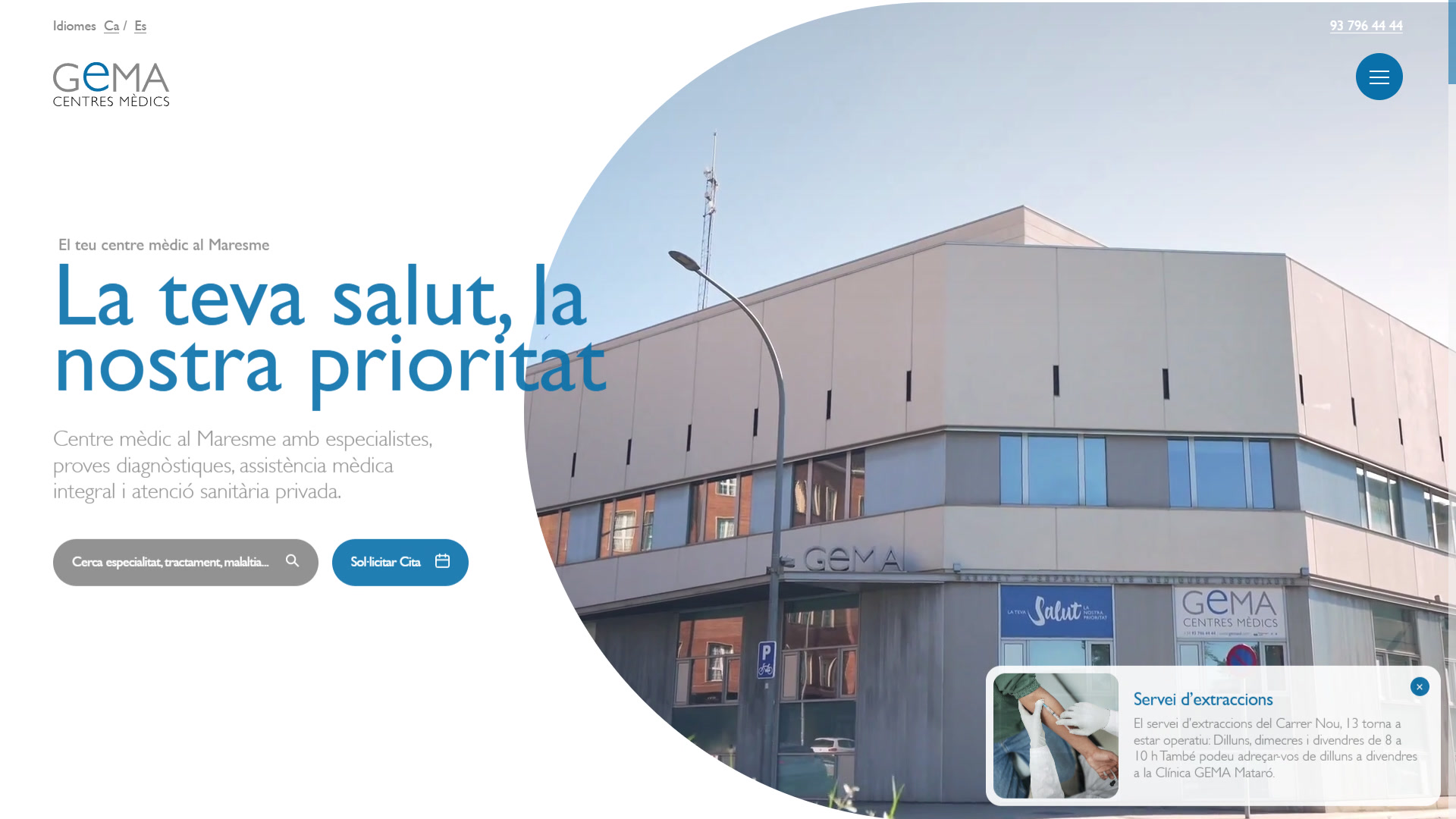
Several locations require more definition. GEMA Centres Mèdics, a Code Barcelona group project, illustrates relationships between centres, specialties and practitioners. It is included as a design and development reference without assigning it the exercise’s budget. Your organisation needs to define shared information, local differences and maintenance. The multi-location aesthetic clinic marketing guide explores that coordination. Scope the relationships before assuming that adding another centre simply means copying a page and changing its address.
Request scope, materials, revisions, testing and handover from each provider, alongside subsequent costs. Identify access, licences and continuation terms. If the team will change, the guide to website and account handover when switching agencies helps prepare the starting position. A quote becomes easier to assess when you can identify what the clinic receives and what work it must contribute, including information, approvals and availability for the project’s agreed reviews.
Tell us which website your clinic needs for 2027: locations, services, languages, materials and diary system. Lead The Mood can define the commission with the Code Barcelona group’s strategy, design and development team. You can review a concrete proposal with its line items and conditions before deciding whether that is the work worth commissioning now. The brief should leave both teams with a shared understanding of the website they are preparing.