The campaign carries the group’s name, the ad shows a beautiful reception and the enquiry reaches a phone answered in another town. The person wanted to visit the nearby clinic on Tuesday. Reception explains that the service is offered elsewhere. Before anybody discusses the design, there is already plenty of marketing work on the table.
As an aesthetic clinic grows, communication has to support an organisation that has become more complex too. A shared brand sits alongside different teams, premises and appointment books. People should be able to recognise the group and find the information for the location they need without conducting a small investigation. This guide proposes how to organise websites, content, campaigns and responsibilities so that relationship remains workable as the group changes.
Decide what belongs to the brand and what varies by clinic
Before opening profiles or commissioning more creative, map the group. Identify its locations, the services available at each, the practitioners involved and the people receiving enquiries. The information must support everyday work. If a practitioner spends Thursdays at another clinic, somebody needs to know where to update their introduction and what to explain when an appointment is requested. A shared record with owners and review dates can be a useful starting point, provided someone maintains it.
The brand needs shared principles for presenting itself. Its name, visual identity, writing style and general service explanations create a foundation that each centre can use. Local differences then deserve their own space: people, premises, availability, arrival and contact. Branding for aesthetic clinics should provide examples of that relationship. A handsome template achieves little when nobody knows how to introduce a new practitioner or where to place the location’s phone number without disrupting the layout.
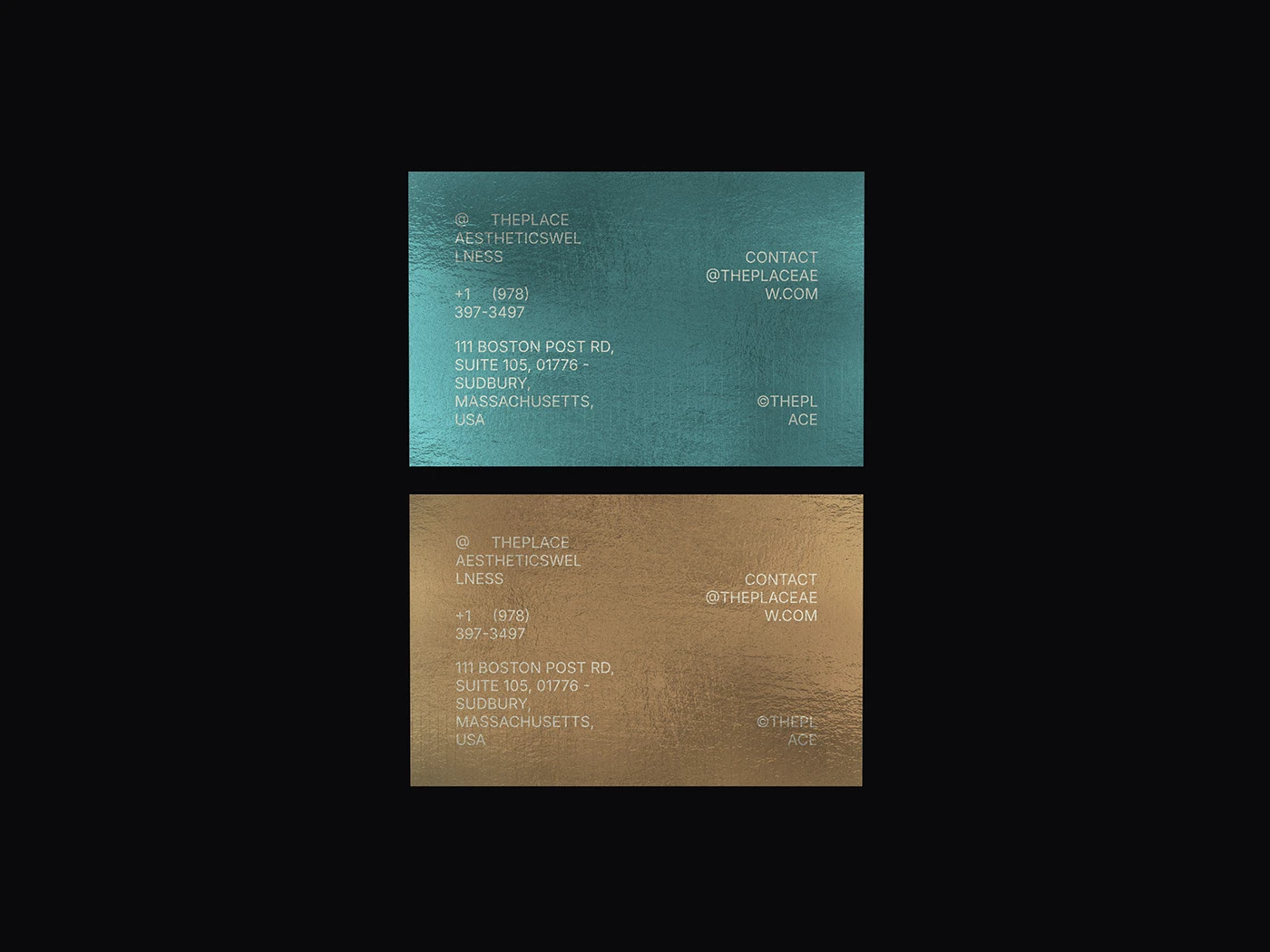
The Place cards below are two variants of one identity application, with a shared composition for contact information. The project credits creative direction to FourStudio&CO, visual identity to Luigi Bressa and support to Digital Fuel Agency. They offer a reference for information sitting within a recognisable visual language. These are two graphic variants, not two locations. For a clinic group, the exercise can inform rules that let people change local details without inventing an entirely new piece each time.
Agree decision-making too. Management might approve brand direction while each location confirms its own details. The person responsible for clinical information reviews that content. Marketing consolidates comments and publishes the agreed version. This is a proposed allocation to adapt to your organisation. It should prevent every correction travelling through five separate conversations with no clear record of which contains the final decision, or whether the local team has seen the published change.
Shared identity and communication principles.
Confirmed location information and availability.
Review of the relevant care-related information.
Agreed coordination, versions and publication.
Build a website that helps people choose a location
A group website can bring together a brand introduction, service pages and individual clinic pages. Each answers a different question. The brand explains who is behind the organisation; the service provides approved general information; the location establishes where care takes place, with which team and how to make contact. Connect those pages. A visitor arriving through a service needs to see where it is available. Somebody starting with a location needs to discover what can be requested there.
Avoid making every clinic a complete copy of the website. A shared service explanation can sit alongside availability by location. The local page develops details that help someone choose: team, premises, access, contact and arrangements the centre can confirm. This architecture accommodates real differences without requiring three maintained versions of every paragraph. The local SEO guide for aesthetic clinics discusses useful pages for nearby searches, including the information a local visitor should be able to verify before making contact.
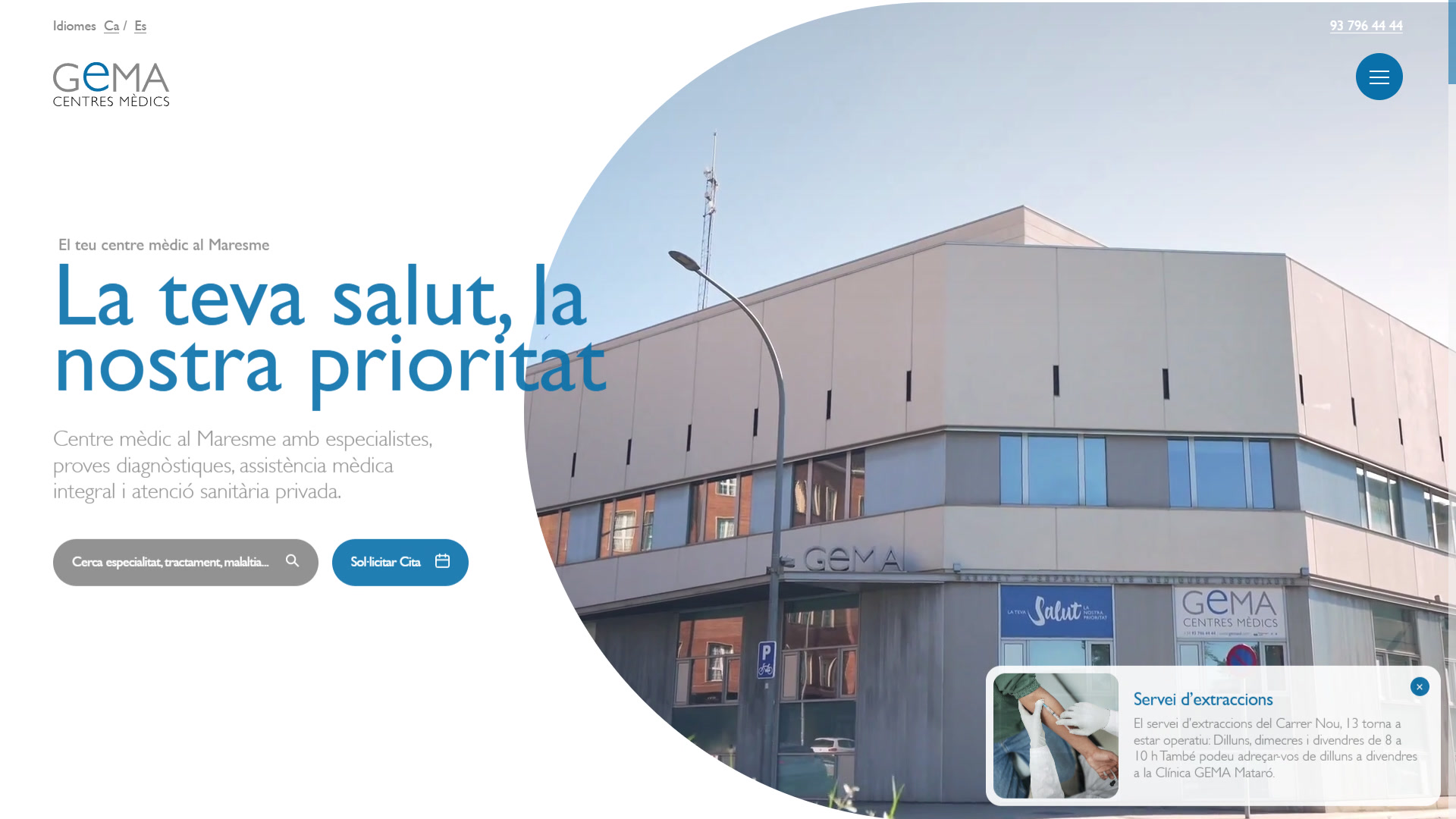
GEMA Centres Mèdics, a project from the Code Barcelona group, illustrates relationships between centres, specialties and practitioners on a healthcare website. It is included for that organisation and design work. Your group needs relationships built from its own information and a way to maintain them. A practitioner may appear at several clinics, for example, while their profile explains where they work and retains a consistent introduction when their activity changes. Decide where that shared information lives.
Contact should retain context. A form can identify the selected clinic and pass the request to the appropriate team. With central reception, agree how staff identify the location and handle requests requiring another centre. The page should explain whether someone is requesting information, proposing a time or confirming a booking. Test the journey on a phone with reception: what the visitor sees, what the team receives and which questions would have to be asked again.
Include the less photogenic situations in the review: an absent practitioner, a replaced phone number, a service no longer offered or a changed building entrance. Decide where the change is recorded and which pages depend on it. Shared data structures may help maintain that information. Define them with development around the group’s size and operating model, rather than relying on somebody remembering every place where the same detail was previously typed into a page.
Connect local acquisition with a specific destination and team
Google locations must represent actual centres and meet its conditions. The Business Profile guidelines cover names, locations and contact, with criteria for chains and practitioners. Do not add cities to names just to pursue rankings or create profiles for addresses without a real clinic. Review each setup against the actual centre and the conditions applicable to it, including any proposed practitioner profiles.
Visibility is not allocated like office supplies. Google explains that local results depend principally on relevance, distance and prominence. Each centre needs accurate information and its own work; opening another cannot promise identical positions. For planning, examine searches and pages for each location alongside the enquiries it receives. Distinguish available evidence from assumptions about demand before using a projection to commit a larger budget or compare the centres.
For campaigns, begin with the location, service and capacity that need attention. One centre may need to introduce its opening; another may have a service ready to receive new enquiries. The ad, destination page and reception should share that intention. Tracking by centre makes the journey reviewable, although account and campaign structure will depend on investment and management needs. There is little value in multiplying structures without a practical reason or the resources to maintain them.
An identified need and location.
Information and contact for the relevant centre.
An assigned enquiry and a clear next step.
Before increasing investment, check what happens when an enquiry moves to another centre. That may be useful when the person agrees, but someone must explain the change and record who continues the conversation. Forwarding a message does not confirm an appointment. The guide to clinics receiving enquiries but few bookings separates those stages and helps identify where attention is needed before the group spends more to generate additional requests.
Produce group content while keeping each clinic recognisable
A shared calendar can combine approved general explanations, practitioner introductions and material from individual centres. Identify what can be shared and what belongs to a particular location. A reception photograph should not illustrate arrival at another clinic as though it were the same place. Content becomes more accurate when the team recognises where it was produced and its intended use. That also makes commissioning easier than sending another message asking for “something for social”.
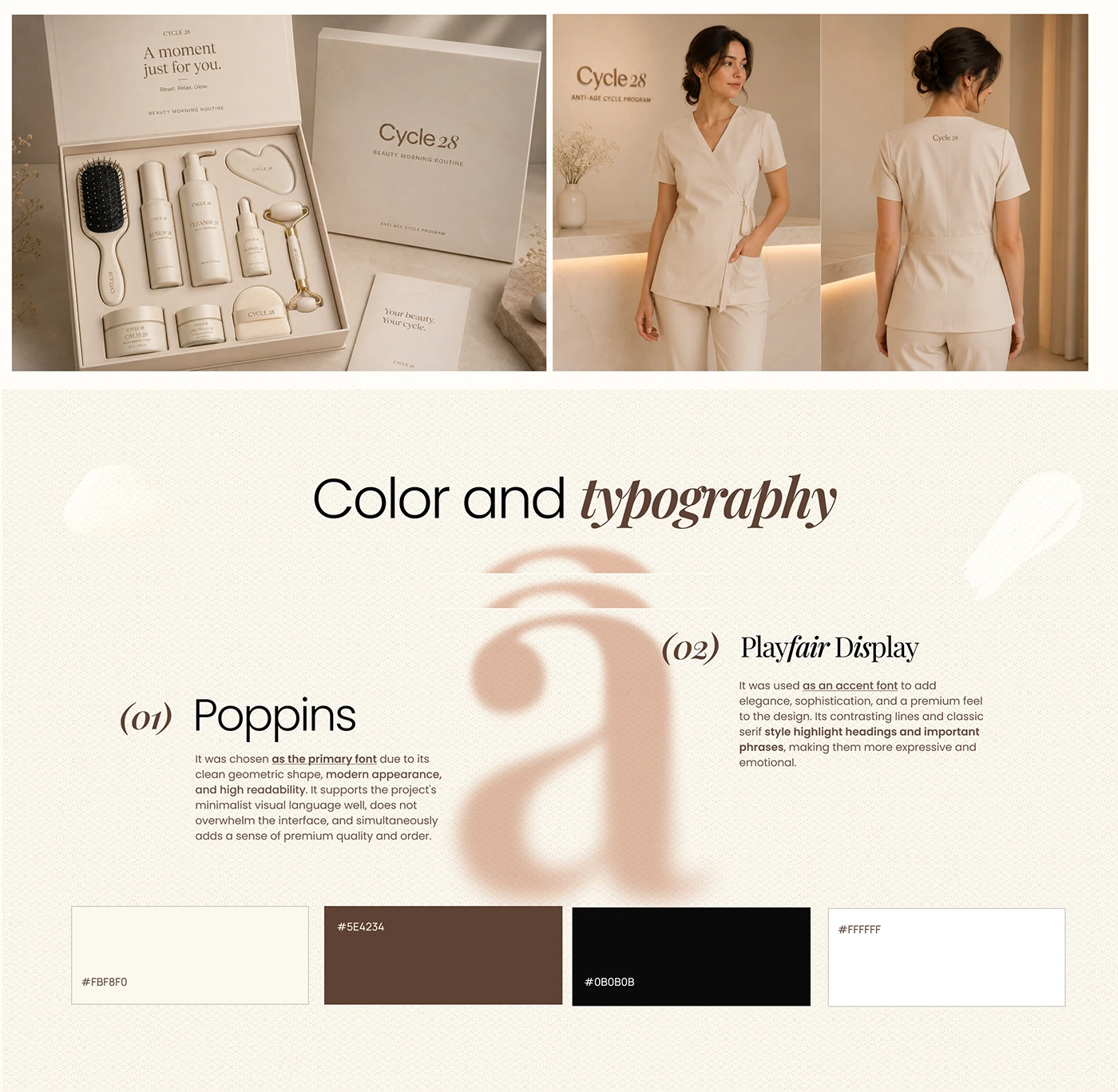
The Cycle 28 identity project, published on Behance by Tania Syoma, Julia Tarna and Varvara Barva, presents applications, typography and palette together. This is an external design proposal. It provides a reference for discussing a system that can support different pieces. Group consistency should make room for a particular person or space in context, while retaining shared principles for composition, writing and versions. The example informs that design conversation without claiming how a clinic network operates.
Maintain a library identified by centre, participants, date and agreed uses. Planning a photo and video shoot should account for those needs before production travels. A shared brief can coexist with portraits and spaces specific to each clinic. One contact consolidates revisions while local teams confirm their information. Whether to maintain group social accounts or local profiles depends on having enough distinct content, people and response capacity to sustain the chosen arrangement.
Measure by location and understand the group total
A group report needs a local view. Counting all forms together can conceal requests for a service unavailable at one centre, or another location’s response delays. Agree definitions for enquiries, confirmed appointments and attendance, plus how duplicates and transfers are identified. The commercial information needed for tracking belongs in the agreed tools with appropriate access. Clinical information does not need to be copied into a marketing report for the team to understand those stages.
This fictional example proposes a view of one period. It assumes enquiries unique across the group, assigned to a centre, with complete outcome tracking. A request transferred to another location is reassigned without becoming two enquiries. The figures support a reporting discussion; they describe neither LTM results nor a conversion target that every clinic should be expected to meet. Keep the assumptions visible when using the table to discuss what information your own report needs.
| Fictional example | Unique enquiries | Confirmed appointments | Attendance |
|---|---|---|---|
| Centre A | 80 | 32 | 26 |
| Centre B | 40 | 18 | 14 |
| Group | 120 | 50 | 40 |
The table opens specific questions: which services were requested, what availability each clinic had and where conversations ended. Check source information before attributing outcomes to a campaign. The total alone does not decide where investment should increase. If attendance is missing or transfers have not been reconciled, show that limitation and correct the record before comparing centres as though they operated under identical conditions. A useful report makes the next investigation clearer.
Commission a system that can accommodate the next clinic
Request a proposal separating shared work from work per location: strategy and identity, website structure, materials, local setup, campaigns and reporting. Include owners, revisions and maintenance. A new clinic needs its own information and production even when using the same foundation. Testing the process with one location can expose dependencies before extending it across the group. An indicative schedule still needs to reflect each opening’s conditions and the work the team must approve.
Lead The Mood can coordinate that journey with the Code Barcelona group’s strategy, design and development team. Tell us how many locations you have and what each needs to resolve. We can review what should be shared, what stays local and how an enquiry reaches the people able to handle it. A common brand works more usefully when visitors find the right clinic and the teams managing it know which parts they are responsible for maintaining.