One person searches for an aesthetic clinic nearby, another for a practitioner’s name and a third already knows the service they want to discuss. All three might reach your website, but they arrive with different questions. If everyone lands on a homepage that only partly explains everything, visitors have to do some of the organising the website left unfinished. Local SEO begins by giving them a destination where they can understand the clinic and continue.
For a clinic, this connects the website with its Google Business Profile, service pages and information maintained by the team. It also needs a technical foundation that makes pages discoverable and usable on a phone. This guide proposes a starting map and an order for developing it, with architecture examples, design references and work you can recognise when commissioning a service.
Who you are and where care takes place.
Information needed for each enquiry.
People, roles and approved content.
How the next step is requested and confirmed.
Decide which page should answer each search
Begin with services the clinic actually offers and questions it receives. Where Search Console data is available, review the queries appearing for your pages and the destinations receiving clicks. Then inspect search results to understand whether someone encounters local listings, clinic pages, guides or directories. That observation helps build an intent map. A search for the clinic’s name and a question about arranging a first consultation may need related answers with different functions.
The table below is an editorial example, without market search volumes or ranking projections. It assigns a purpose before writing begins. Clinical leadership confirms service names and care-related information; the person maintaining the website identifies existing pages and available material. Together, these allow you to decide what needs a dedicated page, what belongs within another page and what deserves a longer guide. The map is a working brief rather than a requirement to produce every possible variation.
| What someone wants to find out | Destination to prepare | Information they should find |
|---|---|---|
| The clinic’s name | Homepage or clinic introduction. | Identity, team, location and access to services. |
| Aesthetic clinic in a city | Clinic or genuine location page. | Address, care, practitioners and contact. |
| An available service | Dedicated service page. | Approved explanation and how to request an assessment. |
| A particular practitioner | That person’s introduction. | Confirmed role and locations where they practise. |
| What a first consultation involves | Guide or process explanation. | Organisational information and the next step. |
Assign a main destination to each need and record how it relates to the rest. This helps avoid several pages competing to explain exactly the same thing. The map also gives a provider a concrete brief: pages, outstanding information and publication order. Our SEO service for aesthetic clinics turns that review into content and implementation work with assigned responsibilities. The clinic can then assess what will be delivered and which information it needs to supply.
Imagine a single-location clinic with two service lines, a homepage and a contact page already in place. Its first map might call for a team introduction, specific information for each service line and an explanation of the first-consultation process. Before expanding the blog, check whether those destinations answer the questions received by the team. If a search reaches a page that is too general, record the missing information and where it belongs. The calendar can then begin with recognisable needs and a person at the clinic able to supply and approve each piece of content.
Give each service information people can use
A treatment page needs more than a menu label and a contact button. The clinical team decides what can be explained about the service, who provides it and what requires an individual assessment. Copy arranges that material into an understandable reading experience, with the location and next step available. Reception’s questions help identify practical gaps: where the service is offered, how a consultation is requested and what information the clinic provides before arranging it.
The Cycle 28 presentation on Behance brings website and identity together for a proposal combining clinics and product. Its portrait, leaf and typography create a recognisable visual direction. For architecture, distinguish the journeys that combination introduces: somebody asking about care needs service information, while a product customer needs a catalogue and purchase route. One brand can accommodate both, with pages and contact routes that make the visitor’s current part of the site clear.
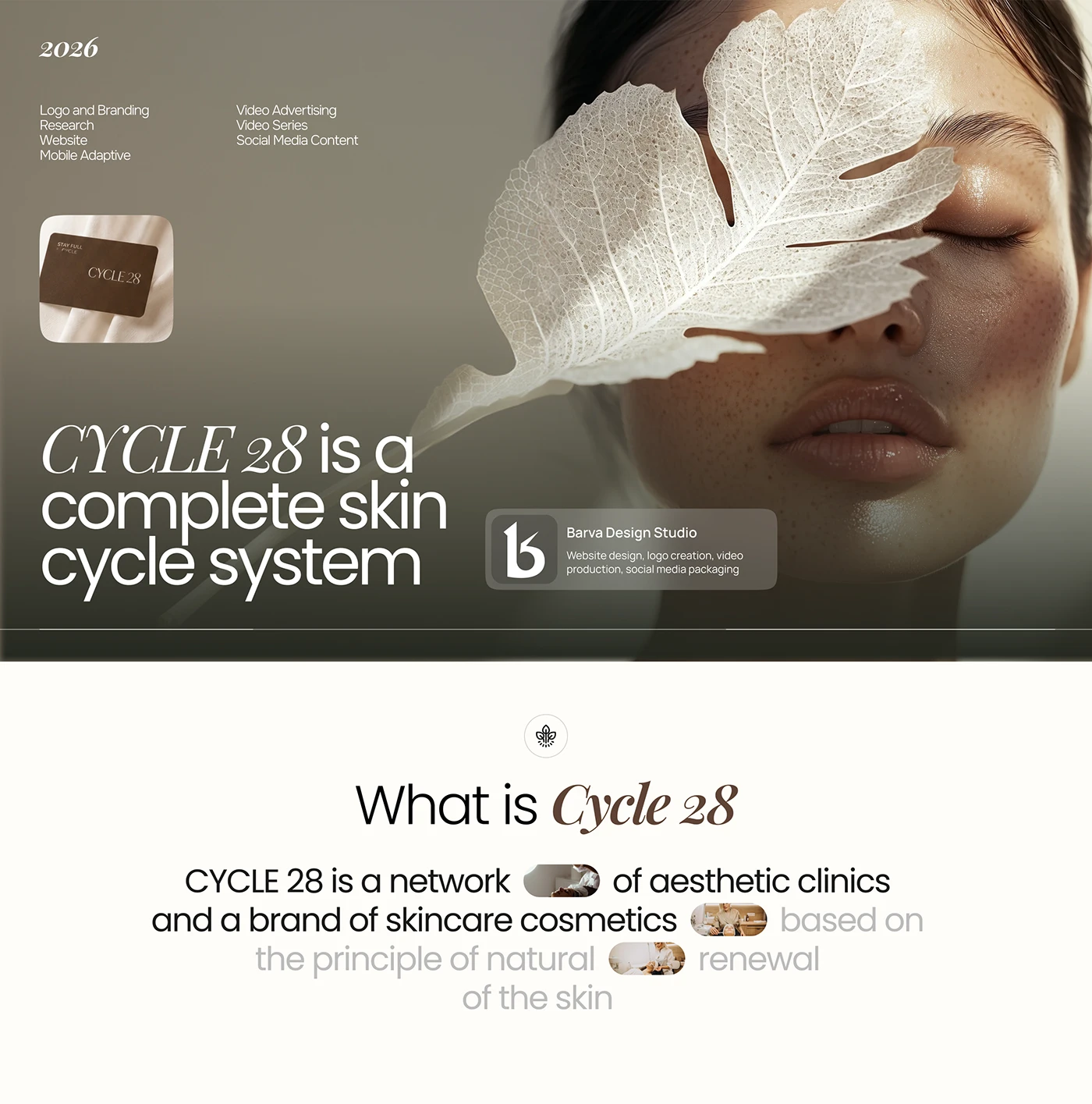
On your website, important information should be part of the page so it can be read, linked and maintained. A photograph or visual composition can accompany it, with text appropriate to its purpose. Prepare the heading, explanation, practitioner and contact as website elements. For an existing page, establish what is missing before opening another with a similar name. For a new site, define this organisation within the aesthetic clinic website design project, alongside copy, production and implementation.
Explain the locations the clinic actually has
A single-location clinic needs people to recognise where care takes place and how to get there. An organisation with several locations needs to explain what varies: address, team, services, opening hours and contact. The website map should follow that reality. When a service is only available at one site, its page should make that discoverable before an appointment is requested. Visitors should not have to infer it by comparing three phone numbers or navigating separate versions of the same generic introduction.
GEMA Centres Mèdics, a project from the Code Barcelona group, illustrates the organisation of centres, specialties and practitioners. The relationships between that information are useful when considering a website with several locations. The case can be examined for its design and development scope. Your clinic’s map will use its own information: which locations exist, who practises at each and which pages the team needs to maintain when something changes.
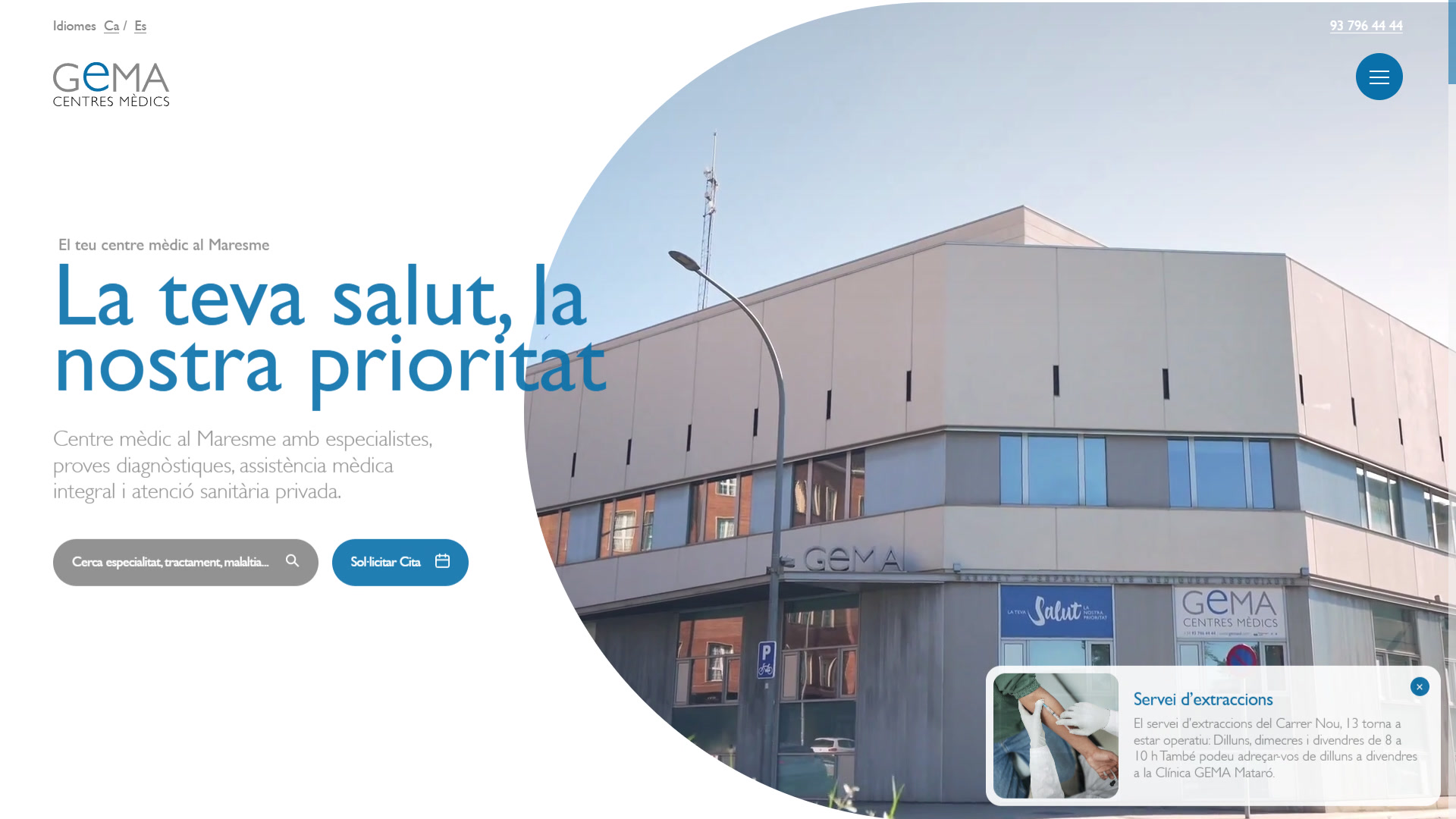
A new local page should provide its own useful answer and belong within the navigation. Replacing a city name in the same text offers little to somebody trying to understand the clinic. Google’s policies address doorway abuse for similar search queries. In the editorial map, give each URL a useful reason to exist and content that can be reached through the rest of the website’s hierarchy.
With two clinics, the decisions need a little more detail. If both share practitioners and some services are only available at one location, prepare relationships people can follow from either the service or the centre page. A shared page can explain the service line while each location supplies its specific information. Where reception is centralised, explain how the appropriate clinic is identified when requesting an appointment. The map does not require duplicating the whole website: it organises shared and variable information so an update can reach the places affected by it.
Coordinate the Business Profile with the clinic’s information
The Google Business Profile guidelines require an accurate representation of the business through its name, address and relevant categories. Practitioner profiles have specific conditions, including a public-facing role and direct contact at the verified location. Review the circumstances before creating additional profiles; a list of specialties alone does not justify duplicates. The website and profile should represent the same clinic.
Then assign somebody to communicate changes to the team maintaining the digital presence. A new phone number needs to reach the places where it is used. Special opening arrangements should be reviewed where appropriate to the clinic’s activity. Check the profile’s website link too: which page opens, whether it identifies the location and whether it leads to a current contact route. A record of the detail, owner, requested change and updated destinations can organise this work without relying on somebody remembering every reference.
- Confirm
The clinic supplies the actual change. - Update
Website, profile and affected destinations. - Check
Visible information and working contact. - Record
What changed and who maintains it.
Google explains that local results are primarily based on relevance, distance and prominence. Maintain the information you can influence and review progress in that context. Positions can vary with the search and the location from which it is made. An isolated Maps screenshot is insufficient to explain all the work or promise a permanent position. Keep a record of the query and circumstances when using an observation in the review.
Connect practitioners, guides and languages within one map
Team pages identify the people providing care and connect their work to services the clinic can confirm. Guides have another job: developing questions that need more space and leading to service information where appropriate. Prepare links around the reader’s next question. A guide about arranging a first consultation can lead to the request process; a practitioner introduction can link to the location where that person sees patients. Each destination then contributes information the previous page introduced without trying to hold the entire journey itself.
For multilingual content, adapt search terms and retain information the team can support in each version. Google allows equivalent language versions to be indicated with hreflang. Those relationships should point to the corresponding pages. A homepage in another language does not replace an article that has yet to be translated. Agreeing which content will have each version makes it easier to maintain the information and contact journey together.
Odyssée, by Nightjar, offers another visual direction for an aesthetic clinic: abstract forms and a restrained presentation. Design can have personality while pages keep clear functions. In your own production, accompany that direction with recognisable clinic information and original photographs where needed. External references support a design discussion; images presenting the location and team need to correspond to your clinic. Plan those materials with the people who can confirm their use and the information accompanying them.

Reviews need a consistent process too. Google prohibits fake or incentivised reviews and selectively requesting positive feedback. Organise who handles the task and how replies are reviewed, keeping care-related information out of the public response. The aim is a presence the clinic can recognise and maintain, with responsibilities that continue when shifts or team members change.
Turn the map into published pages and verifiable work
Before expanding the calendar, check that priority pages can be found through internal links and used from a phone. Review indexation, contact destinations and content available to the search engine. If URLs change, the technical commission should define how necessary journeys and links will be preserved. The SEO brief needs to say who prepares recommendations, who implements them and how each intervention is verified. A task document can be a beginning, with somebody responsible for turning it into completed work.
In reporting, distinguish published pages, outstanding information and observable search data. Search Console impressions and clicks help review visibility; enquiries and appointments need their own records. The guide to enquiries that do not become appointments develops that distinction. Once the map is operating, the next priority might be completing a page, answering a question or resolving a technical issue, depending on the evidence available. Record the reason for that choice alongside the delivered work.
Lead The Mood works from Mataró with Code Barcelona’s strategy, design and development team. Explore our clinic SEO services in Barcelona and Mataró, or send us the website, locations and priority services. We can prepare an order of work for the clinic to review: which pages are needed, what information you supply and what the team delivers. The useful map is the one people can actually follow.