Choosing a marketing agency for an aesthetic clinic has a familiar moment: three proposals open, three different ways of describing the work and a fee at the end of each document. One talks about search visibility, another about patients, a third about premium content. It all sounds reasonable. The difficulty begins when you try to establish who will write the pages, whether someone will come to take photographs and how much work will still sit with reception.
The decision becomes easier when the conversation moves to commissions you can recognise. An agency can introduce the clinic, develop its website, produce content or coordinate acquisition. Comparing those capabilities takes examples, named responsibilities and a proposal that explains how the agency will work with your team. This guide offers a way to review them before choosing, with visual references and an example brief to bring to the discussion.
What the clinic wants to develop and what needs preparing.
Who completes each task and what your team contributes.
What you receive, how it is reviewed and how work can continue.
Explain which responsibilities you want to hand over
A clinic launch and an established practice can need very different budgets even when both ask for “marketing”. A new clinic might still need its identity, photography and website. An established one may want consistent communication, an introduction for a service or better handling of existing enquiries. Prepare a description of the location, priority services, languages of care, available material and current channels. Add the team’s availability to approve content and respond to people asking about the clinic.
The first conversation should help make that need more specific. Pay attention to the agency’s questions and how its recommendations connect with the information you provided. If it proposes a new website, ask which problems it needs to resolve. For campaigns, ask which service it would communicate and where the enquiry would go. For social media, discuss what can actually be produced with your team. A recommendation you can follow through to a deliverable is easier to assess than a collection of channel names.
Distinguish advice from implementation as well. Some commissions finish with an assessment; others include copywriting, design, development and publication. Both can be useful when you know who will complete the remaining tasks. Our guide to attracting patients to an aesthetic clinic helps you examine the journey behind the brief, from the search to a first consultation. You can use that journey to identify where the agency’s involvement should begin and end.
Read the portfolio by asking what the team delivered
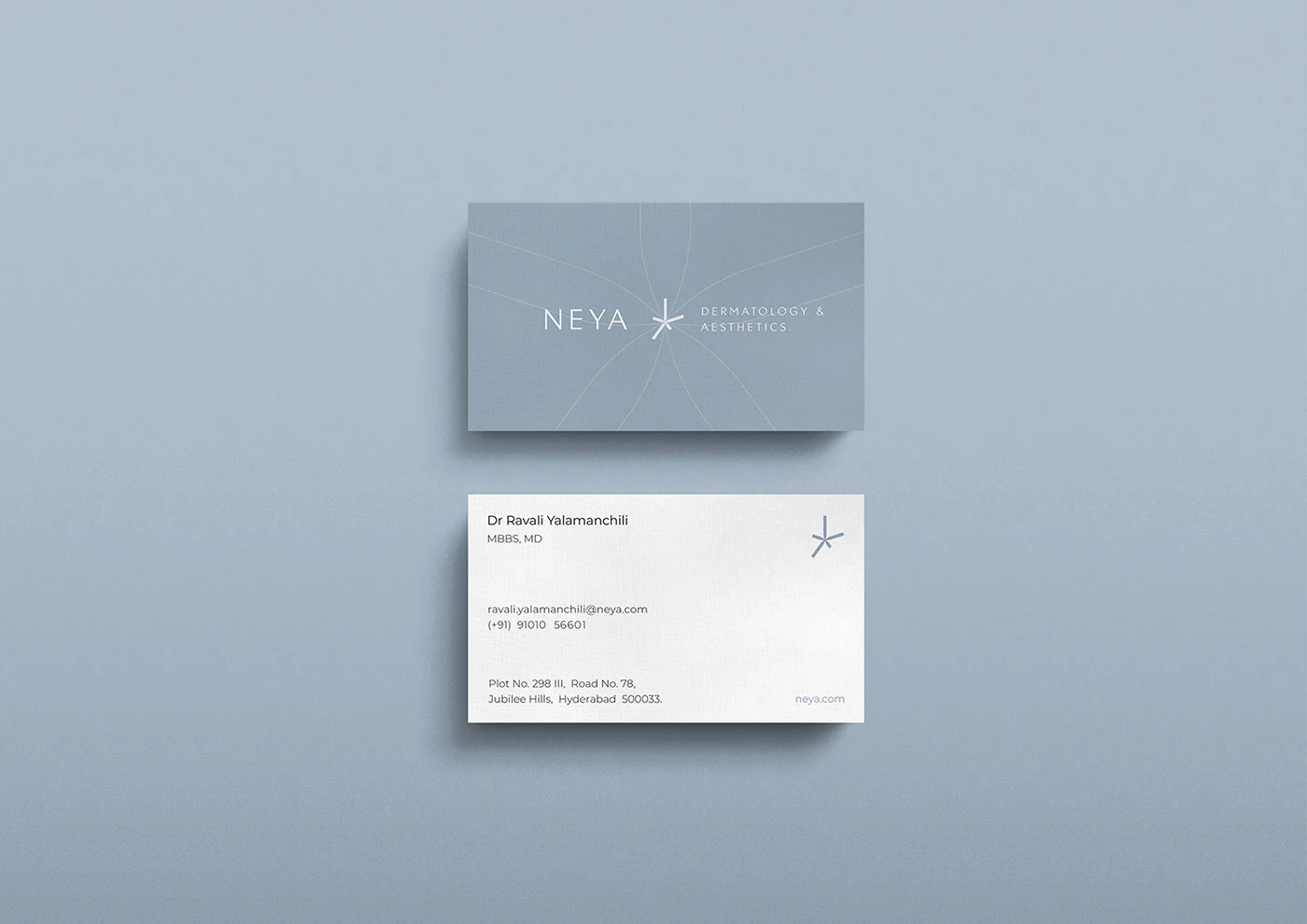
A well-presented project is a good opening for a conversation. Then establish what was commissioned and which parts the agency carried out. Neya’s identity, published on Behance by M Studio, offers a concrete application to inspect: business cards using a blue-grey palette, symbol and contact details within the same visual system. Look at the hierarchy and continuity between the two sides. For a branding proposal, applications like these help show how the identity extends into materials the clinic will use.
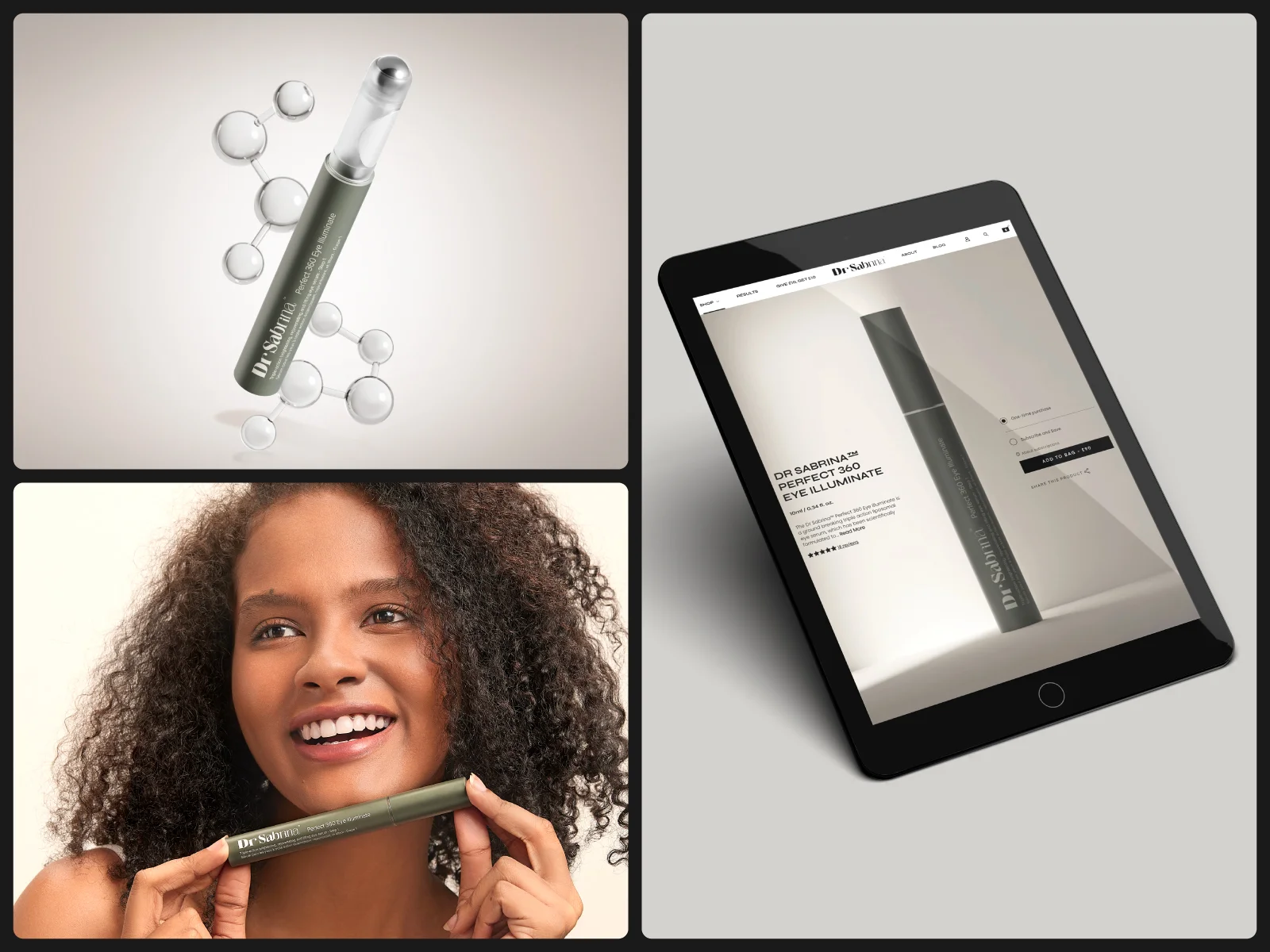
For digital work, ask which journey the project supports. DR SABRINA, by AwchatOlsenDesign, is featured on Awwwards as a Shopify website for an eye-care product brand. Its presentation can inform a discussion about product imagery and ecommerce. A clinic explaining services and arranging first consultations has other pages and operations to define. Read the reference through its scope: catalogue and purchase on one side; clinic information, an appointment request and confirmation on the other.
Ask each agency for a project it can explain from the initial problem through to the deliverables. Within the Code Barcelona group, Esblada Medical illustrates a corporate website for an anatomical pathology technology provider. You can examine the work to discuss product information, visual presentation and design. To assess acquisition as well, request evidence specific to the period, channels and results being presented. A portfolio image and a commercial performance report answer different questions; the discussion becomes stronger when each is used for the work it can demonstrate.

Compare deliverables, production and fees on the same basis
A monthly fee needs a description of the work. “Content management” might cover copy and design using existing photographs, or include a clinic shoot, video editing and publication. Ask how many original pieces will be produced, which adaptations are included and who supplies the starting images and information. When a piece appears on two channels, distinguish the original idea from its versions. That small clarification prevents a comparison between eight ideas and eight files.
For a website, identify pages, languages, copy, photography, review and contact functions. For SEO, ask which pages will be worked on and whether implementation is included. For advertising, separate preparation, management and media budget. Website design, SEO and social media management for aesthetic clinics each have their own deliverables, which can be coordinated. Keep those distinctions visible in the proposal even if you commission several services from the same agency.
Suppose the first commission is a service page in Spanish and English, plus two short introduction videos. Ask whether the agency interviews the practitioner, writes both versions, designs the page and publishes it, or whether your clinic completes some of those tasks. For the videos, identify filming, editing, subtitles and covers. Then establish what a review round means and how a clinical correction is incorporated. That detail can reveal substantial differences between proposals that both appear to include “website and videos”. The example does not define a package: approved photographs and copy may already be available to use. If material is missing, it needs to appear in production or as an outstanding contribution from the clinic. Reflect that starting point in the scope before comparing the fees.
| Budget line | What to look for | What it helps compare |
|---|---|---|
| Initial preparation | Identified pages, materials, access and setup. | Work at the beginning and what the clinic receives. |
| Ongoing work | Deliverables, frequency, review and owner. | Recurring work and its dependencies. |
| Production | Session, people, location, originals and versions. | New content and adaptations of existing material. |
| Media and other costs | Specified advertising spend, licences or travel. | Separate costs and how they are approved. |
Then check the total for the period you are considering, with taxes and additional costs identified in the proposal. An initial fee can materially change the comparison over the first few months. The 2027 aesthetic clinic marketing costs guide develops an example with separate budget lines. Use it to prepare questions, then ask each provider to confirm its current prices, terms and scope for the work you would commission.
Meet the people who will produce and approve the work
The commercial meeting is a good opportunity to establish who will coordinate the account and how copy, design, production and development are shared. Ask which tasks involve collaborators and who is responsible for delivery. Agency size alone tells you little about the relationship ahead. It is more useful to know whom you will contact when a service changes, how feedback is consolidated and who can decide whether a task affects the schedule.
The clinic needs assigned responsibilities too. One person might gather information and feedback; the responsible practitioner approves clinical content; reception confirms opening hours, contact details and the appointment journey. Agree what happens when an approval is missing or somebody cannot take part in a shoot. Writing down that process helps the team prepare alternatives within scope, rather than discovering halfway through the month that every piece depends on a single interview still waiting to happen.
- Prepare
Agency and agreed materials - Review
Clinic and the owner of each detail - Consolidate
One response with specific changes - Publish
Approved version and delivery record
Campaigns also require a review of the service, message and channel options. Google, for example, applies health-related targeting restrictions. Ask the proposal to identify who carries out that review and how necessary changes will be handled. A sales presentation cannot replace checking a specific campaign before launch. That review should be recognised as a task in the plan, with the right people available to resolve questions.
Prepare account access and continuity at the start
Make an inventory of the domain, website, local profile, advertising accounts and reporting tools. Identify the responsible person and the access each participant needs. For the Business Profile, Google’s ownership and representative guidelines encourage the business owner to own the profile and add representatives as managers whenever possible. Confirm the appropriate arrangement for each platform and retain a responsible person within the clinic who can maintain the relationship with those accounts.
The proposal should also identify the materials to be delivered and their usage terms: finished pieces, adaptations, editable originals where included, photographs and third-party elements. Specify what happens to work in progress and how the collaboration closes if it ends. Review the duration, renewal, notice and handover work before accepting. Confirm these points with the provider for your particular commission, so that a team continuing the work can identify the accounts, materials and outstanding tasks.
Ask for a review that leads to decisions
Before hiring, ask what a progress meeting would look like. It should distinguish completed deliverables, work waiting for the clinic and observable information from each channel. A published page is a deliverable. Its impressions and clicks are search data. Received enquiries and confirmed appointments require their own records. Agree which information exists, who provides it and what limits apply when relating it to the agency’s work. This gives the discussion a consistent basis from the beginning.
A useful example might be: “We published the agreed page and reviewed the contact route. Reception still receives the same question about appointment confirmation, so we will clarify that step and check the response.” This is a review example, rather than a client result. The agency should be able to explain the next change it proposes, the evidence behind it and what it needs from the clinic. A commercial projection is easier to evaluate when its assumptions are stated clearly.
Ask how an initial plan would be reviewed if it did not develop as expected. There may be missing information, a production dependency or an unclear response to enquiries. Establish how learning is recorded and how a change of priority is agreed. The report needs to be useful to somebody running a clinic with limited time to decide which work to authorise next. It should help that person connect what happened with the commission being proposed.
Give the shortlisted agencies the same brief
To close the comparison, send the same summary to the agencies you are considering. For example: one location, two languages of care, an editable website and a service that needs a clearer introduction. Ask them to define the page review, necessary production, contact route and follow-up. This is a purchasing scenario for comparing responses, rather than a fixed package. Each agency can suggest a different order when it explains what it has observed and why that starting point is appropriate.
Assess the whole proposal: understanding of the clinic, quality of examples, clarity of scope, available people, coordination and an affordable cost. Lead The Mood shares a strategy, design and development team with Code Barcelona. Our aesthetic clinic marketing service brings those capabilities together in a proposal for your clinic. Tell us what you want to delegate and we can discuss pages, materials and responsibilities together. The proposal should make the purchase clearer, rather than leave you with another folder of questions.