The clinic still smells of fresh paint and somebody is already asking what will go on Instagram. It is a reasonable scene: opening day is approaching, substantial work has gone into the project and the team wants to show it. The difficulty comes when the post needs a final name, a photograph that does not exist yet and a link leading to a “coming soon” page. The first campaign has taken a seat while it waits for the rest of the project.
Marketing a new aesthetic clinic means preparing those pieces so they arrive together at the right moment. Branding, website, photography, local search and enquiry handling share dependencies. Organising them early makes the work easier to commission and introduces a clinic the team can describe and support. This guide proposes an order and an example calendar, from the first decisions to a review after opening, with practical deliverables to discuss with your providers.
Before announcing an opening, define what will open
Begin with a shared brief covering the centre, location, team and services that can be communicated in the first stage. Add languages of care, the way to request a consultation and the person handling replies. Management confirms the date that can be announced and the conditions needed to do so. The commercial calendar works from that information, with somebody responsible for reporting changes. It helps avoid printing a date the project cannot yet support.
Separate the introduction of the centre from communication about individual services. The first can explain who you are, where you will be and how to find out about the opening. The second needs specific information and approval from the team providing it. A complete introduction does not require every service line to launch at once. Establish what belongs to the opening and what will follow, so the website, posts and reception tell a consistent story.
Initial offer, team, location and a date that can be announced.
Brand, content, images and contact route.
Approved materials and requests reaching their destination.
Coordinated communication with reception available.
The brief also helps define a budget. A location with an established identity and available photography starts somewhere different from a new brand that still needs a name and visual direction. If opening is close, identify what can be prepared well and what needs a second delivery. Record the decision in specific pages, pieces and tasks. “Create a buzz” becomes rather difficult to review when the invoice arrives and nobody has agreed what was supposed to be delivered.
To make it concrete, imagine an opening with one location, two practitioners and an initial service line. A first commission might bring together the centre’s introduction, team profiles, a service page and an explanation of how to make contact. The shoot would produce portraits and images for those destinations; opening posts would introduce them with links to the website. Reception would receive a shared sheet containing the location, announced hours and request process. This is an example scope to adapt to the actual clinic. If the premises are delayed, the same list identifies what changes: interior photography, date information, scheduled pieces and reception’s reply. The team can decide which materials remain usable and which should wait, without rebuilding the communication from scattered conversations. It also gives each provider a specific change to review within its own part of the commission.
Prepare a brand that can leave the studio
The logo is one part of the commission. Before opening, it needs to sit alongside information: opening hours, a practitioner’s name, an address and an explanation of the first visit. Test the identity in those uses before calling it complete. The visual proposal should work on a sign and a small screen, with versions prepared for production. Agree how the clinic sounds when introducing itself, using language the team can use comfortably in its own communication.
A list of applications prevents new commissions emerging every other day. Include signage, cards, documents, signatures, digital profiles and templates that will actually be used. Distinguish design from printing, fabrication and installation, including their suppliers and schedules. Sign dimensions and a printer’s formats are project information, rather than details that will resolve themselves at the end. The branding service for aesthetic clinics defines that family of materials before production begins.
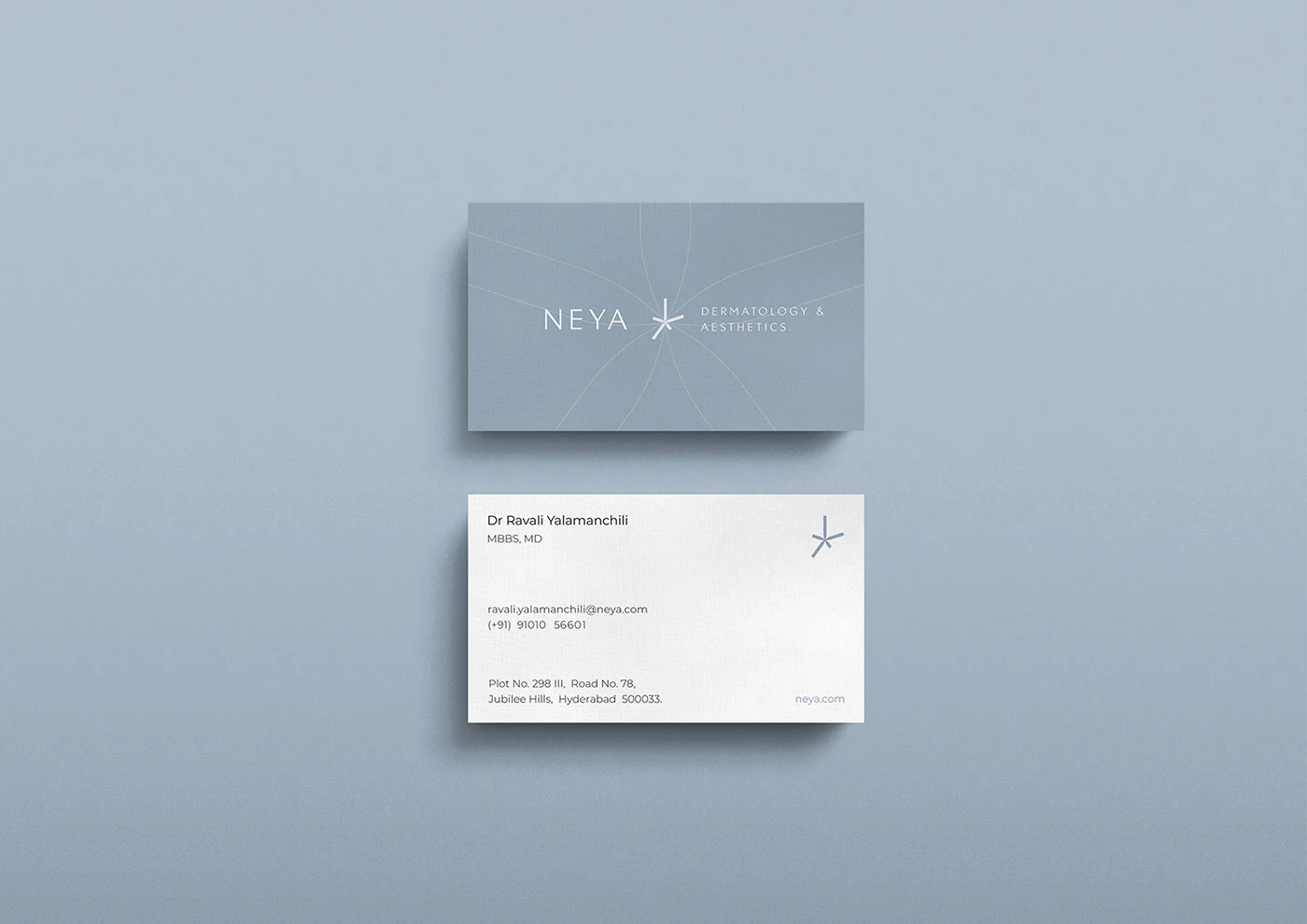
Neya’s business cards, from M Studio’s project published on Behance, show a visual system applied to a small format: symbol, composition and a colour connecting the pieces. The reference helps discuss continuity across materials. Your clinic’s cards will need their actual information and printing conditions tested. An attractive mockup supports a design conversation; a card delivered to reception also requires a file prepared for manufacture. Both belong in a clear commission.
Publish a website that explains the clinic’s current stage
Before opening, the website can introduce the team, location and confirmed launch information. If appointments are not available yet, the contact route should explain its purpose: answering an organisational question or receiving a request to be handled later. Review buttons and messages when consultations become available. Visitors should understand whether they are asking for information, requesting a call or choosing an available date, including when they arrive directly on an internal page.
Commission a page map with content owners. Homepage, team, initial services and contact can form a coherent first delivery when they provide sufficient information for that centre. The clinical team approves care-related explanations; editorial work arranges the material and maintains a shared voice. Our guide to aesthetic clinic website features develops the design, content and appointment-journey decisions worth reviewing before publication. It also gives the clinic practical tasks to use during acceptance testing.

Likha, WONDR’s digital project featured on Awwwards, offers an individual direction in which portrait, colour and typography work together. For a launch, translate that intention into the materials available, using photographs that represent the centre. If the space is not ready, schedule which images can be produced and when. An editorial commission can advance while the premises are being finished, provided it knows what remains outstanding before the pages can be completed.
The Google profile needs its own preparation. Google allows businesses to set a future opening date and explains that, with the date entered and business verified, the profile can appear in the preceding 90 days. Review its business representation guidelines for the actual location. This is a platform feature, rather than a search-ranking timescale a provider can guarantee. Plan the profile around accurate information about the centre.
Produce an introduction with something to say
An opening provides material for a thoughtful introduction without making every post a countdown. Introduce the people who will see visitors, show how to arrive, explain contact arrangements and present the space when ready. Those pieces answer different questions and can become a short series. Each needs a message, materials and a destination. The calendar then contains content as well as a publication date, with a recognisable purpose for the work being produced.
Plan photography and filming around their uses. A practitioner portrait requires a different composition from a website header or vertical video. Prepare team availability, spaces, clothing and messages ready to record. If reception is still occupied by building work, portraits and interviews might move forward in another agreed session. That decision belongs in the quote: travel, production days and additional filming each involve work. Establishing the schedule early helps identify what can be captured together.
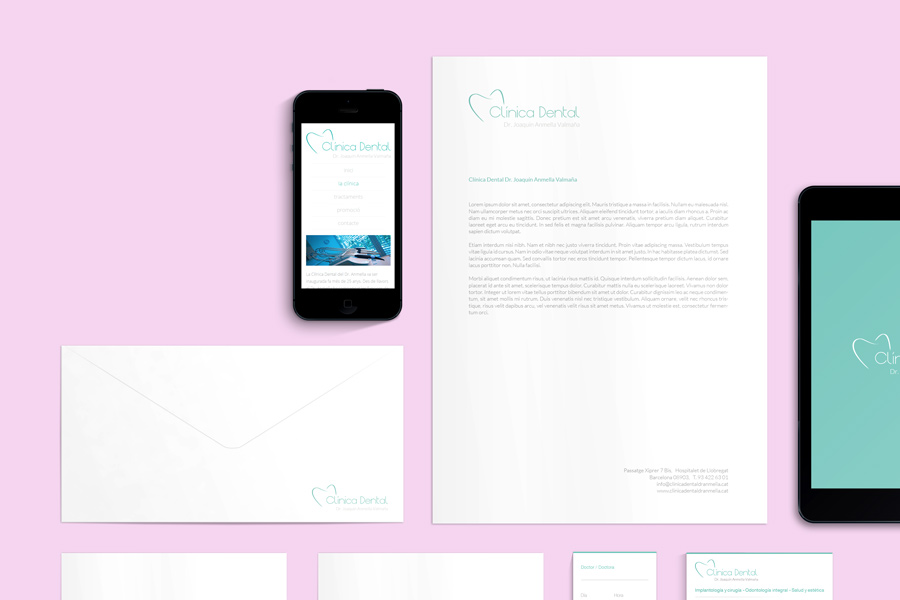
In the group’s identity work for Dr Anmella Dental Clinic, the applications show a brand accompanying everyday materials. For an aesthetic clinic opening, that continuity can connect the premises with digital communication. Prepare originals and channel versions separately: one introduction adapted into two formats does not become two different ideas. Agreeing how deliverables are counted makes production proposals easier to compare and gives the clinic a clearer view of the materials it will receive.
Before scheduling posts, appoint someone to consolidate feedback and distinguish organisational information from content requiring the clinical lead’s review. A piece can be finished in design and still await that approval. The calendar needs to reflect it. Keep material available after the opening too: answering a common question or introducing somebody properly remains useful once the ribbon-cutting scissors have been put away. That second stage should have its own content and production brief.
Work backwards from a date that can be announced
The following six-week calendar is an editorial coordination example for one location. It assumes the team can supply information, brand decisions are made within the period and providers agree their deliveries. Use it to discuss dependencies and owners. A new identity, complex website or shoot dependent on the premises being handed over may require a different timescale. The actual calendar is built around those conditions, with the team’s review availability included.
| Example stage | Main work | What enables progress |
|---|---|---|
| Weeks 1–2 | Initial offer, messages, identity and page map. | Chosen direction and assigned content owners. |
| Weeks 3–4 | Photography, copy, website and first pieces. | Available materials and reviewed explanations. |
| Week 5 | Pages, contact routes, profiles and file review. | Internal tests and resolved corrections. |
| Week 6 | Coordinated publication and opening communication. | Confirmed date and prepared reception. |
| After opening | Received enquiries, questions and outstanding content. | Observable information for the next commission. |
A short review between owners should resolve what is blocking the next delivery. Where an explanation is missing, identify who will supply it. If the date changes, check affected materials before scheduling more content. Keeping the same information across website, profile, social channels and reception requires a shared reference point. A simple change record can prevent contradictory versions of an opening that has not happened yet. Decide who updates that record and informs the people responsible for publication.
If advertising is proposed, define what it will introduce and what can be handled after the click. Health and aesthetic campaigns require a review of the specific service, message and channel conditions. The comparison of Google Ads and Instagram Ads for clinics helps define that commission. Spending begins when advert, destination and reception are ready for the offer, with the relevant approvals in place. The proposed campaign should explain those preparation tasks.
Launch the introduction and prepare the next conversation
The opening deserves a carefully prepared introduction, and the work continues in the questions the team receives. Check what information people request, whether they find the location and how consultations are arranged. Record recurring organisational questions for the website or future content. Enquiries, confirmed appointments and identifiable sources provide a clearer basis for decisions than the follower count acquired during the countdown. Keep the stages distinct so the review describes what the clinic can actually observe.
Agreed files, pages, pieces and access.
Owners of editing, enquiries and the next review.
When commissioning, separate identity, website, production, management and media. Add fabrication, printing and tools where involved, and specify review rounds. The 2027 aesthetic clinic marketing costs guide develops that way of reading a proposal. Establish what the clinic retains at the end and who maintains each channel. An opening requires a recognisable project; the following months need an ongoing scope the centre can sustain alongside the work of receiving people.
Lead The Mood coordinates that work through its aesthetic clinic marketing service, sharing strategy, design and development with Code Barcelona. Tell us where your clinic will open and its current stage, the date under consideration, the participating team and materials already available. That information lets us organise commissions and prepare an individual introduction. On opening day, the centre should be recognisable on the other side of the screen too.