Choosing between Google Ads and Instagram Ads for an aesthetic clinic often begins with a budget question: where should the money go to generate enquiries? Another conversation needs to come first. What does the clinic want to communicate, what can it accommodate, what does the page explain and which materials are ready? Those answers make it possible to commission a campaign with a defined job. Without them, two numbers may end up describing different things.
This guide compares Google Search campaigns with advertising on Instagram. Google Ads includes other formats and networks; here we focus on somebody typing a query and encountering an advert. For Instagram, we consider how a visual piece appears within the content experience and invites someone to continue. The choice depends on the clinic’s needs, available evidence and the journey the team can sustain after the click.
The person formulates a question. The advert and page need to respond to that context.
The person discovers a presentation. The content explains why to continue and where it leads.
Begin with the work the clinic needs
A newly opened clinic needs an introduction and accurate information. Another might want to communicate a service with a team and appointment availability already in place. A centre receiving frequent enquiries may need to organise reception before extending its advertising. These starting points lead to different commissions. Define the location, service, language and next step, then compare that priority with what the team can provide. The campaign needs to describe a clinic that exists beyond the screen too.
Review what you know. Received enquiries, visited pages and available search terms can inform the proposal. Search campaigns require an examination of demand and results in the target area. For Instagram, establish which original materials exist, which messages the clinic can approve and how the necessary versions will be produced. A calendar of ideas still needs people, photography, filming and review before it becomes publishable work. Include those dependencies when deciding how much preparation a first campaign requires.
Separate advertising from organic work as well. A Google Business Profile and useful pages are different from a paid campaign. Maintaining Instagram is also a different commission from managing advertising on it. They can be coordinated while retaining their own budgets and deliverables. The local SEO guide for aesthetic clinics develops the website and profile foundations; here we consider what needs to be added when you decide to test paid advertising.
To compare proposals, give the people preparing them the same starting point: one location, a service the clinic wants to communicate, an available page and confirmed reception hours. Ask what they would review before choosing a channel and what they would produce for the initial commission. One response might require search research and page adjustments; another might need filming and adaptations of an introduction. Both should explain how the enquiry reaches the clinic. Keeping the original problem consistent makes it possible to compare work and cost without mistaking a creative idea for a campaign ready to operate. Where a provider suggests changing the priority, ask which information about the clinic supports that recommendation.
Google Search: respond to a question somebody has typed
Google Search campaigns can show adverts in relation to searches for products and services. The specific question matters. A clinic’s name, an aesthetic clinic in a city and general information about a procedure represent different contexts. Before writing adverts, identify the queries you want to address and the page able to answer them. A search expresses a question; readiness to arrange an appointment still needs its own journey.
Imagine a clinic with a defined service, a reviewed page and reception ready to explain the first consultation. The commission can begin by studying searches for the service and area, preparing messages and reviewing the landing experience. Ask the proposal to distinguish branded searches from other queries and explain which terms will be reviewed. That helps separate activity introducing the clinic to somebody from activity accompanying someone who already knows its name. Both can have a purpose when reported with that context.
Likha, the digital project by WONDR featured on Awwwards, offers a reference for the visual destination: a circular portrait, coral typography and space around the elements. On a campaign page, that direction needs to accompany a service explanation, location information and a clear contact route. The composition helps discuss how to present the clinic. Assessing campaign performance requires its own data and an understanding of how enquiries are received and handled.

Reporting should connect observable searches, the advert, page and recorded action. When people reach an explanation that is too general or enquire about another service, there is a specific review to carry out. An aesthetic clinic Google Ads proposal should include that work and distinguish management tasks, development requirements and information needing the clinic’s approval. This gives the review a practical relationship with the campaign rather than treating the website as a separate, fixed background.
Instagram Ads: produce a presentation worth continuing
On Instagram, a visual piece can introduce the team, the space or an approved explanation from the clinic. Someone may encounter it without having typed a search about that service at that moment. The piece therefore needs to make sense on its own: what it presents, whom it identifies and what it suggests doing next. An elegant photograph can attract attention; the message and destination need to carry that introduction forward into useful information.
The dr.saash social mockup published by Olya Cooper on Behance shows a format decision: a vertical piece with typographic hierarchy, presented alongside a phone version. Text size, contrast and space for the message can be examined as design choices. The reference helps discuss mobile readability. Its use here is editorial; the mockup does not provide results from an LTM campaign or establish advertising approval. The clinic’s own message and materials need to be reviewed for their intended use.
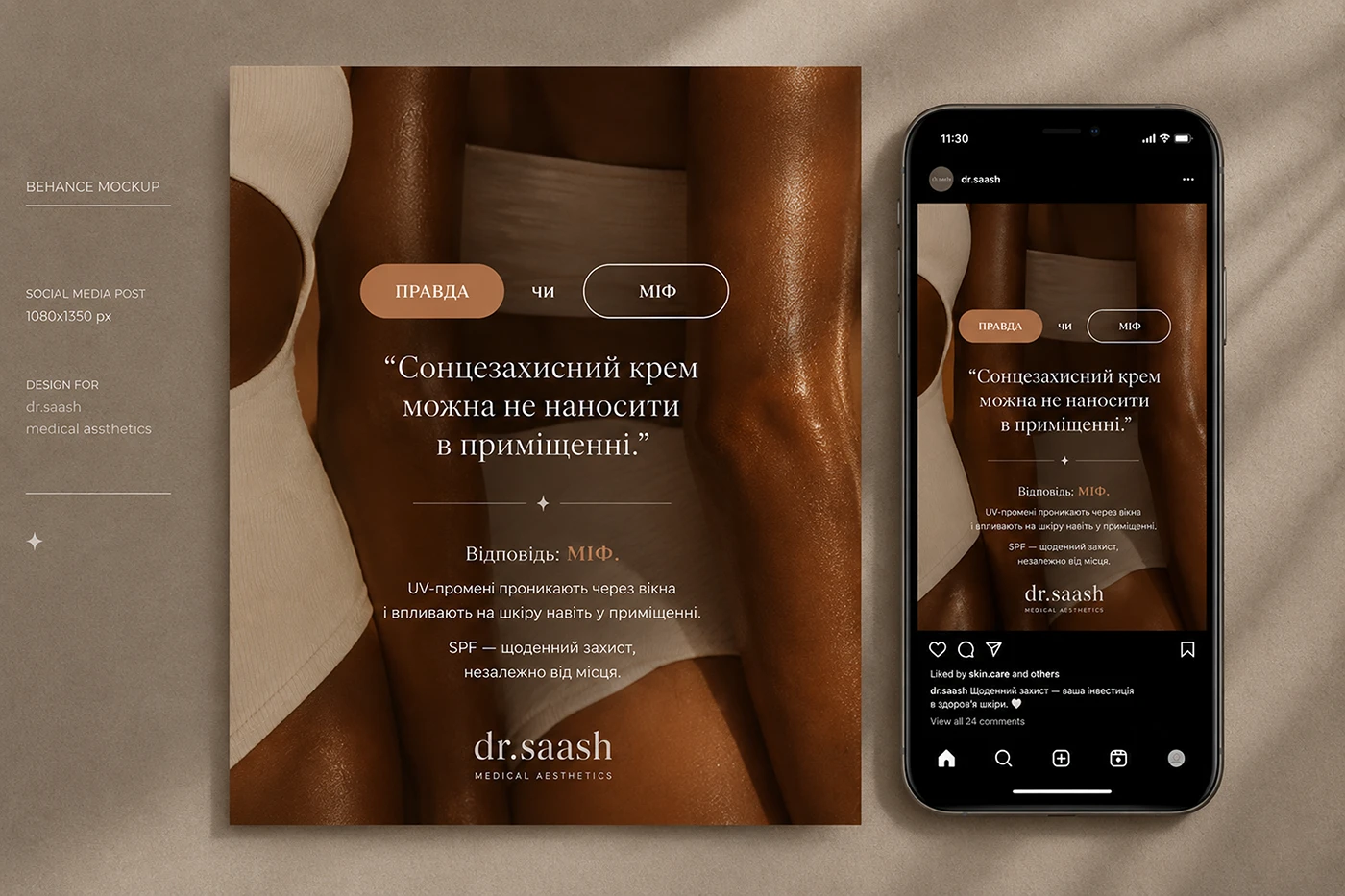
For your own production, agree who participates, which messages have been reviewed and what versions will be delivered for the selected placements. Specify photographs, video, subtitles, covers and review rounds. One idea can have several adaptations, with original pieces counted separately. Social content production and management for an aesthetic clinic can supply that foundation. The paid campaign also needs its own commission covering setup, reporting and the destination, so the clinic knows which work is included in each part.
An initial production brief could develop three organisational messages: a practitioner introducing their role, a short arrival tour of the clinic and an explanation of how to request a first consultation. These are ideas for defining the commission, with content approved by the team. Specify the required formats and versions, including what someone will understand with the sound off. If the next step is a page, check that its introduction continues the message in the creative. That connection lets you review a complete proposal, from the piece appearing on screen to the information received by somebody who chooses to continue.
Prepare the service, message and response before launch
Advertising review is part of the work. Google has healthcare and medicines policies and health-related restrictions in personalised advertising. Assessment depends on the service, message, destination and applicable options. Do not assume every audience or tracking method is included in a generic proposal. Establish who will review the specific campaign before publication and how issues will be handled during the commission.
Meta’s Health and Wellness policy requires advertising for cosmetic surgeries and procedures to target people aged 18 or over, and restricts messaging that denigrates physical appearance. Review the current version and specific campaign with the person preparing it. An organic piece or portfolio reference should not automatically be treated as suitable advertising. The approved clinical information and the platform’s advertising review have related but distinct roles in the work.
Actual offer, clinic and approved information.
Reviewed copy, materials and formats.
Page and contact route preserving context.
Owner of the reply and confirmation.
The clinic needs to know what happens when somebody enquires. If the campaign invites a first-consultation request, reception should be able to explain how it is arranged and confirmed. Check form delivery with a clearly identified internal test and distinguish a request from a completed booking. Clinical suitability belongs with the responsible practitioner. Marketing reporting can work with enquiry states and organisational reasons needed to review the journey within the agreed scope.
Compare the same outcome and the full cost
One channel might record contact openings, another received requests and reception confirmed appointments. Calling all of them leads makes comparison difficult. Define a unique enquiry and how messages relating to the same request are grouped. Retain identifiable source information and label what remains unknown. The guide to enquiries that do not become appointments develops the records and a worked example using different denominators. Apply those definitions consistently before drawing a conclusion from two campaign reports.
| Comparison | What to confirm | Decision it helps review |
|---|---|---|
| Enquiries | Same unique-request definition and period. | What arrives and through which identifiable channel. |
| Confirmed appointments | State validated by reception. | Which part of the journey reaches an agreed date. |
| Investment | Media separated from management and production. | Which costs are included in the calculation. |
| Team contribution | Reception, approvals and outstanding material. | Capacity needed to sustain each proposal. |
The budget should separate media, management, production and initial preparation. A campaign using an existing page begins with a different brief from one needing a shoot and a new destination. Compare the complete period you are considering with those tasks identified. The 2027 aesthetic clinic marketing costs guide helps prepare that discussion without turning an isolated fee into an apparently all-inclusive package. Ask the provider to confirm the current scope and conditions for your clinic.
Time is needed to establish enquiry outcomes too. A recent request may remain open, and a confirmed consultation may be scheduled for a later period. Review comparable groups and state the dependencies. A campaign’s results provide evidence for that clinic, offer and moment. Preserve that context before extending the conclusion to every service or deciding that a channel will always be cheaper. The reporting should make it possible to explain which question remains unanswered as well as what has been observed.
Choose a first test the team can explain and sustain
For a clinic with a prepared page and identifiable search demand, a proposal might examine a first Google Search commission focused on a service and location. Where the priority is introducing the centre and original material is available, an Instagram test can be planned around that introduction with a defined next step. These are planning scenarios: the provider needs to establish which fits the actual circumstances, budget and conditions of the service. The choice follows that assessment rather than a universal allocation rule.
Agree in writing what will be prepared, who approves it, how much goes to media and what information will be reviewed. Establish what happens if material is missing, a service cannot accommodate enquiries or measurement does not correspond to the intended action. The first cycle should leave recognisable creative and changes, alongside a review supporting a decision to continue, correct or expand the work. Splitting money between two channels before resolving those dependencies can leave two incomplete tests.
Lead The Mood can review the whole brief through its aesthetic clinic marketing service. Send us the website, location and what you want to communicate, alongside the available materials and reception capacity. We can prepare a scope separating campaign, content and destination so you can assess the commission. A useful decision ends with work the clinic recognises, rather than an endless debate between two logos.